
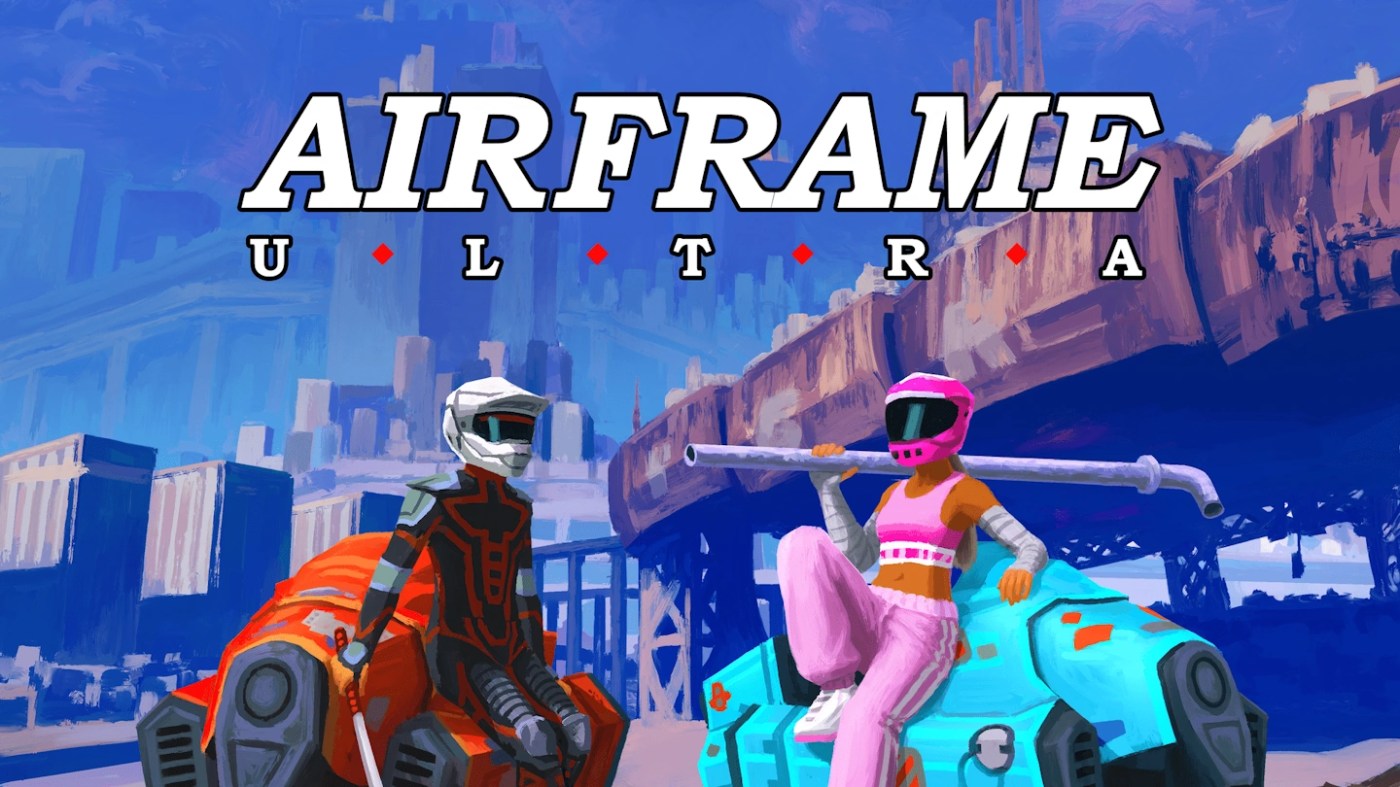
With Rain World, VIDEOCULT created one of the most fascinating games of the past decade. It works because every element of its design serves the same, uncompromising core ideal: You’re a small, vulnerable creature surviving in an indifferent ecosystem. Unlike other games, the environment doesn’t revolve around you. It feels hostile, not just because of stalking predators but also because the environment is hellbent on erasing your progress.
Add to that the lonely atmosphere and minimal storytelling, which combine to create something rare: A constant tension, deep immersion, and a sense of authenticity unlike anything else. Rain World stands apart precisely because it refuses to chase conventional “fun” and because it fully commits to a clear artistic vision. To me, it’s pretty much the epitome of “indie”.
So, my excitement for VIDEOCULT’s next project was inevitable. What I didn’t expect, though, was just how boldly different that project would be. Airframe Ultra is not a continuation of Rain World’s bleak, meditative survival. It’s a hard swerve into speed, impact, and intensity.
And, god, I loved every bit of it.
Immediate Impact
Airframe Ultra is part racing game, part brawler. You boost across dense, chaotic maps, scrambling towards the goal – and then you jump off your bike and beat the hell out of each other before doing it all over again.
It establishes its personality instantly. Where Rain World was slow and suffocating, Airframe Ultra is fast, loud, and kinetic. It’s a racing game at heart, yes, but you’re not exactly confined to the race track, and besides a few boundaries, you’re pretty much free to go on whatever trail takes you to the goal. You and your hover bike tear through streets, trails, waterways, sewers, and open air, dodging police fire, traffic and baricades, on top of dealing with your rival racers who also do whatever it takes to get to the goal.
Movement feels immediate, collisions are brutal, and the momentum is everything!
It’s not just the speed of everything that struck me here. Rather, it’s the density of the action, the constant pressure, and this feeling that makes you lean forward, daring you to keep up that turned this demo into something really special for me. It’s competitive to its core. If you get the chance to sabotage others, why not kick them off their bike, ram into them, unload a few shots, or even smack them with a street sign? Every action flows into the next with barely any downtime, creating a very intoxicating sense of controlled chaos.

The Feel of the Machine
The greatest strength of the demo lies in its motion. Controls are sharp but weighty, with impacts carrying real force. Manoeuvres require commitment. Mistakes and any kind of hesitation get punished instantly.
There’s this sense of physicality to everything that I am just in awe of.
More than anything, it’s just plain fun to lean into waves and jump high into the air, chaining your rise with a boost to overtake opponents in the last possible moment. I played a few matches against a friend, and races felt so incredibly close at times that it got my heart pumping, even if it was just a friendly competition with no stakes in it or anything.
Crucially, the game understands something that many speed-focused titles forget: Speed means nothing without friction.
You’re constantly negotiating momentum, positioning and timing. There’s a tension between acceleration and control that makes this thrilling. It’s not exciting because it’s fast. It’s because it’s volatile.
There’s just something incredibly satisfying about just how fast you can go only to slam into a wall or incoming traffic, blowing up to smithereens – and it doesn’t feel frustrating. It just made me laugh out loud. It’s unbelievably funny just how violent the explosions do get.
FIGHT ON!
Racing is only half the story, as I mentioned earlier.
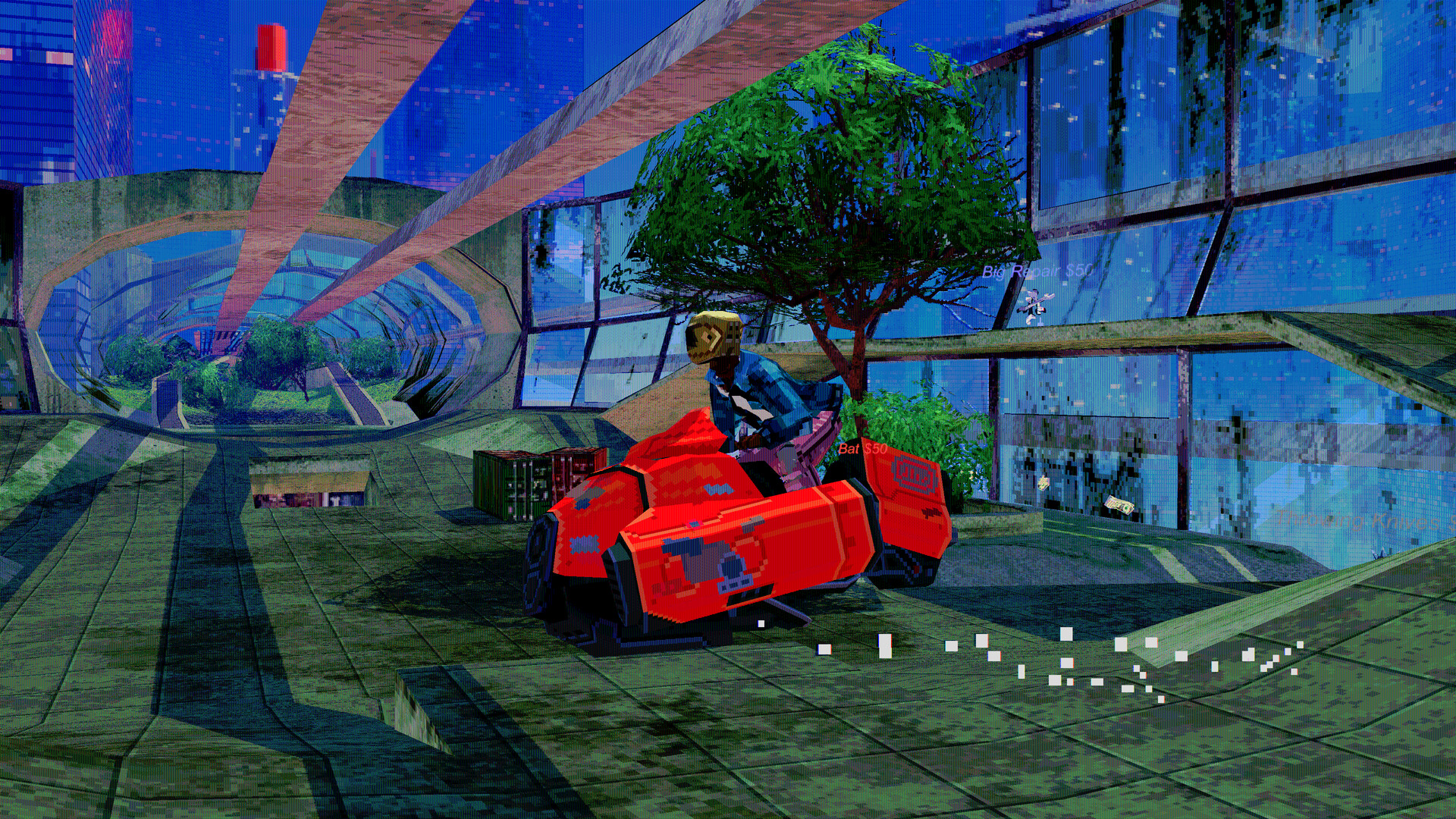
After race segments, everyone piles into scrappy, chaotic standoffs. Punch, kick, swing chains, shoot, throw a machete, lob Molotovs, and use whatever is at your disposal to take out your competitors, lower their lives and score some points. There’s a wide array of melee and ranged weapons, power-ups and consumables… and it’s just pure chaos!
It’s messy, silly, brilliant.
On top of that, there’s opportunity to create and dramatic comebacks as well as rather absurd moments to enjoy as you battle it out… and then you just return to your bike as if nothing happened, walking away with a minigun, body armour and a riot shield… or whatever else you scrounged up, only to risk it all in the next car crash.

Emergent Drama!
I just find it so cool to see how these systems intertwine seamlessly with each other. Nothing truly feels “isolated”. Racing feeds into combat, and combat bleeds into the racing. Every mechanic contributes to a single loop built around movement, impact, and rapid adaptation.
Encounters never play out the same way twice, especially against real players. Situations escalate quickly and unpredictably. You’re constantly making micro-decisions on the fly, from committing to aggression, taking a risky shortcut, or sacrificing durability when you’re out of boosts which could let a stray rock take out your vehicle if it so pleases.
The maps also very much encourage this kind of behaviour with multiple routes, dangerous shortcuts, shifting terrain, incoming and outgoing traffic, and more. The result is something deceptively rare: Emergent Drama!
Much like how Rain World generated unscripted survival stories through its ecosystem, Airframe Ultra creates unscripted moments of speed-fueled insanity. Success stems mostly through adaptation, and… Gosh, is it fun.

The Presentation
Despite rocking those gritty PSX-style graphics, Jet Set Radio feels slick and modern due to its lighting, music and presentation. I felt reminded of some of Bomberman Hero’s soundtrack, Jet Set Radio’s jank, Beyond Good & Evil’s racing, as well as the Tony Hawk’s games skill ceiling, all combined in this oddly familiar yet incredibly unique cocktail of retro nostalgia and gritty, albeit silly, mechanics.
It’s a very pretty game, actually, and I just couldn’t help myself wanting to explore maps to take screenshots and just enjoy the scenery a bit.
There’s a map that lets you drive inside a Resident Evil-esque mansion. Another has you duke it out in the dark while the horizon is illuminated by a cyberpunky megacity’s skyline. My favourite is probably the map that has you also just ride it out on the ocean, but I was also really into the more industrial maps… and again, this is just a demo, I probably haven’t seen half of what the developers have in store for us.
The maps are pretty, well-designed, and add so much panache to a game that already has me in its polygon-y grip. It feels like a treat to cruise alongside these areas on dangerous cliffs and inside cramped spaces, at super speed, even risking your bike overheating or taking damage because you just wanna ride out the waves more and go even faster and faster… I love this game.
I also really liked the character customisation, although I was a bit upset that my character didn’t get saved. It’s a demo, after all. If that’s the only issue I can find (alongside the issue of sometimes respawning out of bounds or inside of heavy traffic), then that’s great, honestly.
Verdict
If Rain World was about surviving a world that doesn’t give a fuck about you, then Airframe Ultra feels like thriving inside one that actively wants to see what you’re made of.
I’m just in awe.
What impresses me most isn’t just that VIDEOCULT privoted so hard into a very different game from their prior major project… It’s that the same design convictions are still there! The genre changed, the look is different, and it’s a whole new thing… but the commitment to a clear identity and a certain artistic vision hasn’t wavered at all. It’s not a careful follow-up or a spiritual successor. It’s loud, risky, and completely comfortable being its own thing. It’s very indie.
And that just works.
Even in demo form, the game feels cohesive, confident, and polished, even if it’s a little unhinged in the best way possible. It’s chaotic but not sloppy. Punishing but not cruel. Funny without undermining the underlying tension.
Every crash, every mid-air boost, every desperate melee scramble feeds into this sense of adaptation and impact and just… punk? Idk. I dig it.
Most importantly, though, it makes me want to get better at the game. I wanna master its awkward angles, its volatile physics, its absurd weapon plays. I want to squeeze just a bit more control out of the chaos.
If this is only a glimpse of what’s coming, I genuinely can’t wait to see the full picture.
This post was originally written by Dan Dicere from Indiecator.
If you see this article anywhere other than Indiecator.org then this article has been scraped. Please let me know about this via E-Mail.
 Indiecator
Leave a comment