

Mythwrecked: Ambrosia Island is a narrative adventure set on a mythical island home to many different Greek Gods. Stranded in this enigmatic and long-forgotten place, Alex – a backpacker with a busy job who finally got some time off – has to help the Gods remember who they are by forging friendships, solving some light puzzles, exploring the island, and resolving the mystery behind the Gods’ amnesia.
At the core of the game is the so-called Ambrosidex, a mysterious device that offers you a map, lore, and all your tasks, helping you relocate memorabilia tied to the various Gods, keeping track of the things that you have to do, and even allowing the Gods to contact you directly. This is a game that is all about fetching quests and the stories it tells.
Developer: Polygon Treehouse
Publisher: Whitethorn Games
Genre: Indie, Narrative Adventure with puzzles and a lot of exploration
Release Date: December 5th, 2024
Reviewed on: PC
Available on: PC, Switch, XBS
Copy was provided by the publisher.
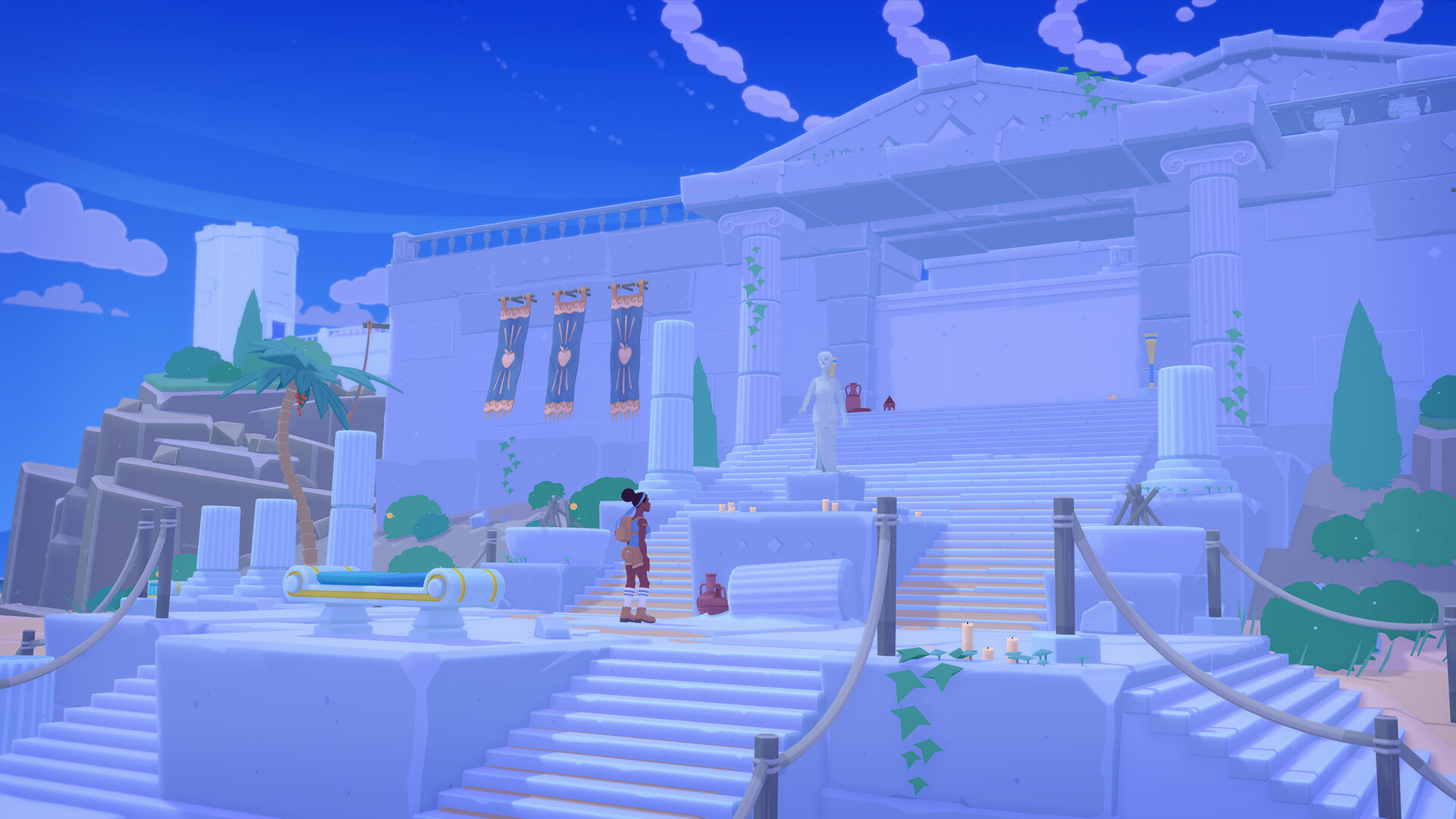
After you’re stranded on this island, you get to meet a quirky and colourful cast of characters, ranging from Gods no longer in their prime. Hermes has become anxious and doesn’t deliver messages anymore, Aphrodite struggles with self-doubt, whereas Hephaistos and Athena are overworking themselves and finding a hard balance between their self-care and their passions, just to mention a few of the stories told.
Mythwrecked: Ambrosia Island is a game about these stories. Rather than embracing the overdone Greek myths as we know them, the developers over at Polygon Treehouse forge their own tales, recontextualizing the polytheist myths of Ancient Greece and combining them with modern elements, which I found incredibly interesting.
The game touches on topics like mental health, self-care and mindfulness. There are themes of doubt and finding one’s purpose, reigniting one’s passion for one’s craft, and also finding new joys in life. The way it touches on many different aspects like that is compelling although I would have wanted to see more depth at times.

The cast of characters you meet in the game – while you’re trying to solve the mystery of Ambrosia Island and find a way home – have lost faith in themselves, neglected their duties after falling out with each other, and when they meet you, they’re initially very closed up and distrusting. Understandable. But perhaps due to the way the game is made or because of Alex’ empathetic nature, they open up fairly soon and allow you to help them.
The favours they ask of you bring variety into the game. You’re tasked with finding memorabilia – objects connected to the Gods – in a “getting warmer” style minigame stretched around the many different areas of the island to find these objects in all sorts of hidden nooks and crannies. On top of that, Hermes asks you to feed the seagulls, Zeus and Hera want you to make the island more welcoming, whereas you’re guiding home spirits for Hades.
These minigames not only give you a reason to explore the island but they also reward you directly by allowing you to progress through the story. Complete a bunch of tasks for the various Gods, and you’re awarded their seal, allowing you passage through different doors that now grant you even more areas to explore.
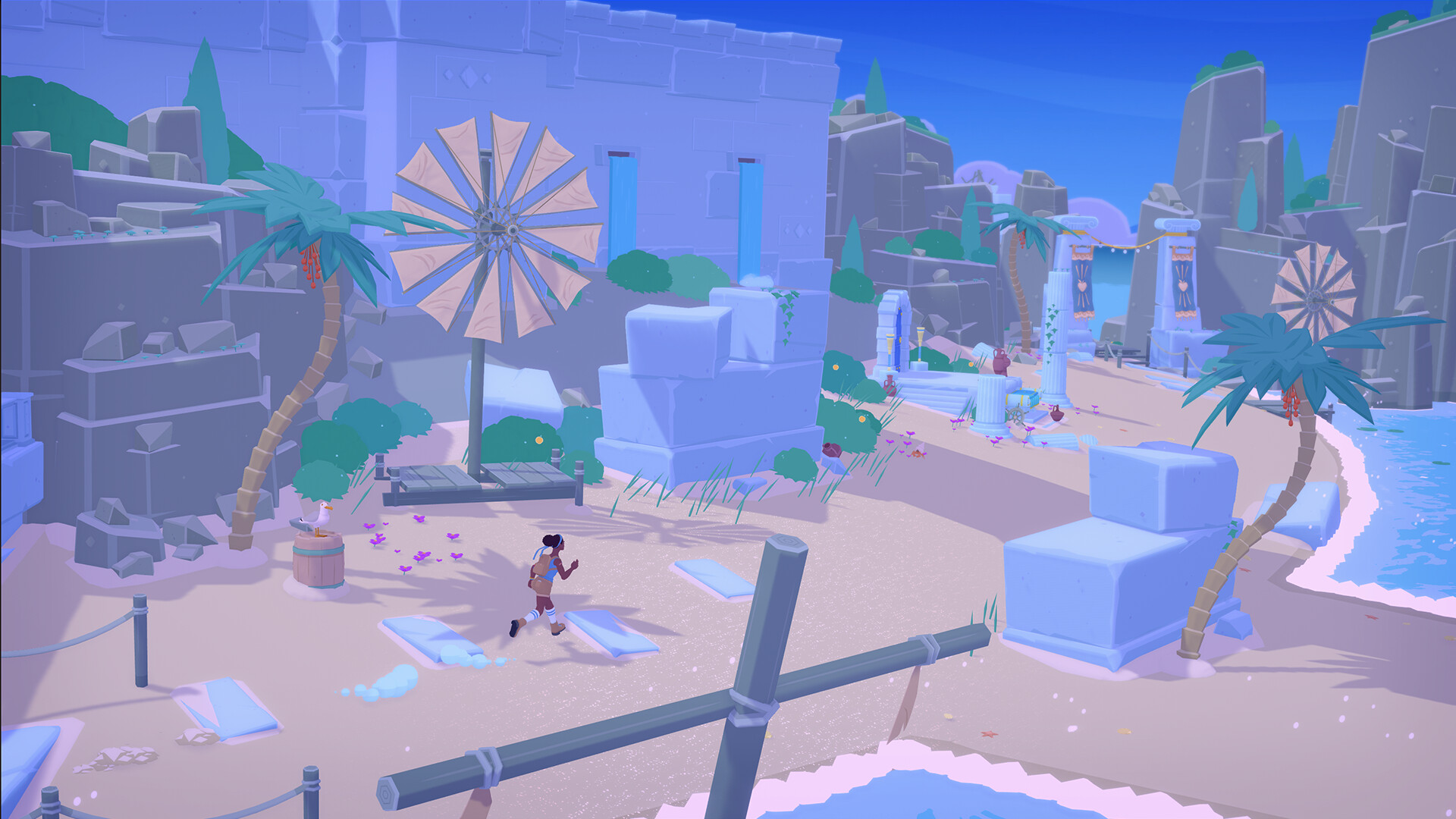
The way in which you have to figure out where to go next and what you can and cannot do at the moment is pretty fun. I love exploration in games and trying to figure out what tools you need to find that one message in a bottle, reach that crate that washed ashore, or to get to the next area is just… fun.
Add to that, that you can swap the ambrosia fruit found everywhere on the island for relics from different Gods, and you find yourself collecting a bunch of different items, from the game’s soundtrack to furniture for your lighthouse, to more practical items like lost memorabilia, portal keys that are used for fast-travel, and farms to not have to forage for fruits anymore… and you suddenly have a very well-rounded game that is all about fetch quests.
I’d imagine that people might find themselves tired of the gameplay loop. It’s definitely not everyone’s cup of tea, but as someone who appreciates a laid-back and cozy-style game that has you hurry from one place to another, giving me the opportunity to min-max my routes, I actually liked this a lot, especially as the day-night-cycle also paints the island in quite literally a new light as the day progresses.

Now, here’s something I didn’t like… The Light House. Initially, it was home to your very first save point but, over time, as I added furniture, I wanted it to become more than just another save location. I wanted it to become our actual home. But for that, it lacks functionality.
Yes, you add furniture and decorations to it, but there is no customization, no small gimmicks and things to interact with. It’s just an (eventually less) empty room and it feels cold and lonely. It’s not alive. If it was a place we actually lived at, perhaps we’d have something on the stove or some small plants to tend to. I know this is a nitpick but I feel like it would have added a lot, personally, even if it was very simple.
Outside of that, I did not like the “voice acting”, mostly grunts and singular words. That sort of style is a bit overdone and I don’t even know if the game needed it necessarily. I quickly turned the voice sounds off because of how annoying the grunts, noises and singular words get.
In that regard, I’m glad it’s an option. Again, being nitpicky here but it genuinely bothered me. I’d recommend going into the options and turning off the voice sounds if you’re also bothered by it.

Another thing here is something about the characters you meet. I really like the more modern approach to the character designs.
Ares is a punk. Zeus and Hera are hipsters. It’s kinda funny, and adds a lot of quirkiness and colour to an otherwise stale and, frankly, serious and problematic pantheon, you know? It’s neat. I’m sure there are plenty of people out there who will not like seeing these designs but I think they’re fitting, even if Hephaistos is a bit pale, although it makes sense since he doesn’t leave the house much, I guess.
But the characters just stand there in the various areas and when it’s their time of day to leave their homes, they just teleport over, even with their lack of powers. Look, I think it would have been much better if the people did actually do things here and there or if they at least walked over to their spots, and stuff.
It’s nice that Cerberus is sleeping all day and it’s great that you can pet him, but what does Hades do all day? I’d have loved to see them do literally anything, even if it’s desk work.

Hephaistos is my favourite God here btw. Make him tinker on some contraption and roll his wheelchair down to his forge. Ares and Aphrodite could tend their respective passions, Zeus and Hera could snuggle while at home and just chat while out and about, Hermes could be seen fishing, Poseidon could be seen relaxing, Athena could be reading… and, and, and. You get what I mean.
As it stands, the characters are just waiting for you to talk to them which breaks the immersion a bit for me. It would add a lot to making the world feel more alive if the game featured that sort of attention to detail, and I’m positive that the developers could very much add something along those lines. If not to this game, then perhaps to their next one.
Overall, though, I found Mythwrecked: Ambrosia Island to be an incredibly interesting game that rewards you for the exploration you do, either with progress in the story, cool items and features, or shortcuts to areas you’ve been to already, connecting the island as you connect the Gods with each other again.
It recontextualizes the Gods of Greek Mythology and manages to retell their stories but in a new light that I find pleasing and not all that far from the tales we know.

Yes, the characters may have the aforementioned issue but in terms of their personalities and stories, they really grew on me, and after beating the game completely in eight hours (because I just couldn’t stop playing), I was genuinely sad to see the end to the game. It was sad to see the credits roll. I would have loved to play more of the game even if I felt satisfied with its length and the content this game provided.
Mythwrecked: Ambrosia Island is a narrative adventure with puzzle elements that cosy gamers who need to take their mind off of things will definitely enjoy. If you’re familiar with the myths of Greek Mythology, you’ll find cool easter eggs and a lot of attention to detail. I’m a fan.
I recommend checking out the game yourself and am eagerly looking forward to playing Polygon Treehouse’s future games, especially after their work on Röki and this title here.
This post was originally written by Dan Dicere from Indiecator.
If you see this article anywhere other than Indiecator.org then this article has been scraped. Please let me know about this via E-Mail.
 Indiecator
Leave a comment