
I was given early access to StarVaders with every intention of getting this review out ahead of launch. It was, after all, one of my favourite demos during Steam Next Fest a few moons ago – here are my impressions from the demo btw. But the game had other plans: every time I sat down to write, I got pulled into just one more run. That should already tell you something.
Hence, rather than talk about whether StarVaders is a good game, I wanna talk about why it is a good game – which is a lot harder to do, I reckon, and I hope that after this review, you, too, will understand just why StarVaders is such a smart, addictive and incredibly original indie game.
Developer: Pengonauts
Publisher: Joystick Ventures, Playworks
Genre: Indie, Roguelike, Tactics, Deckbuilder
Release Date: April 30th, 2025
Reviewed on: PC
Available on: PC
Copy was provided by StridePR.
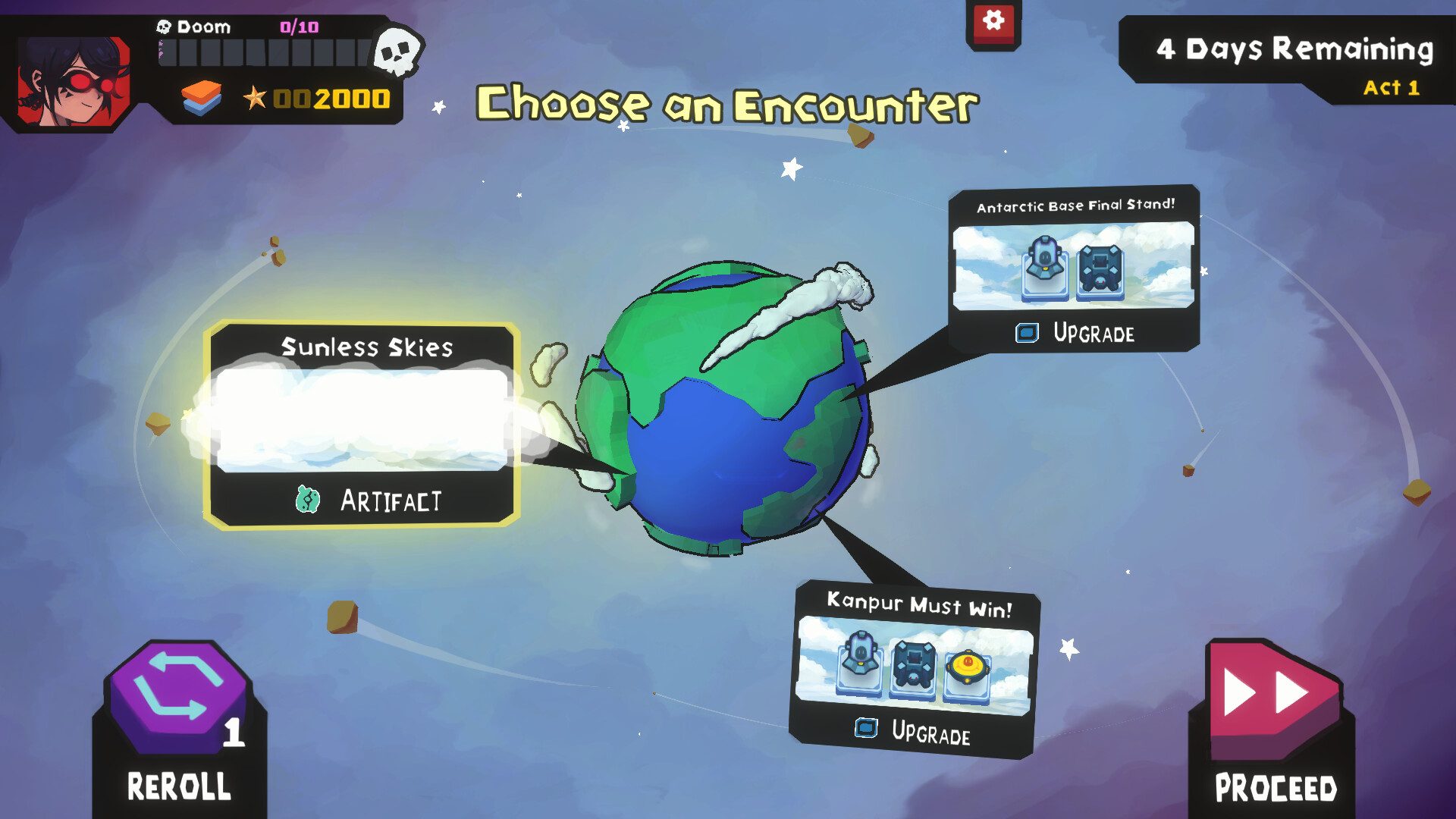
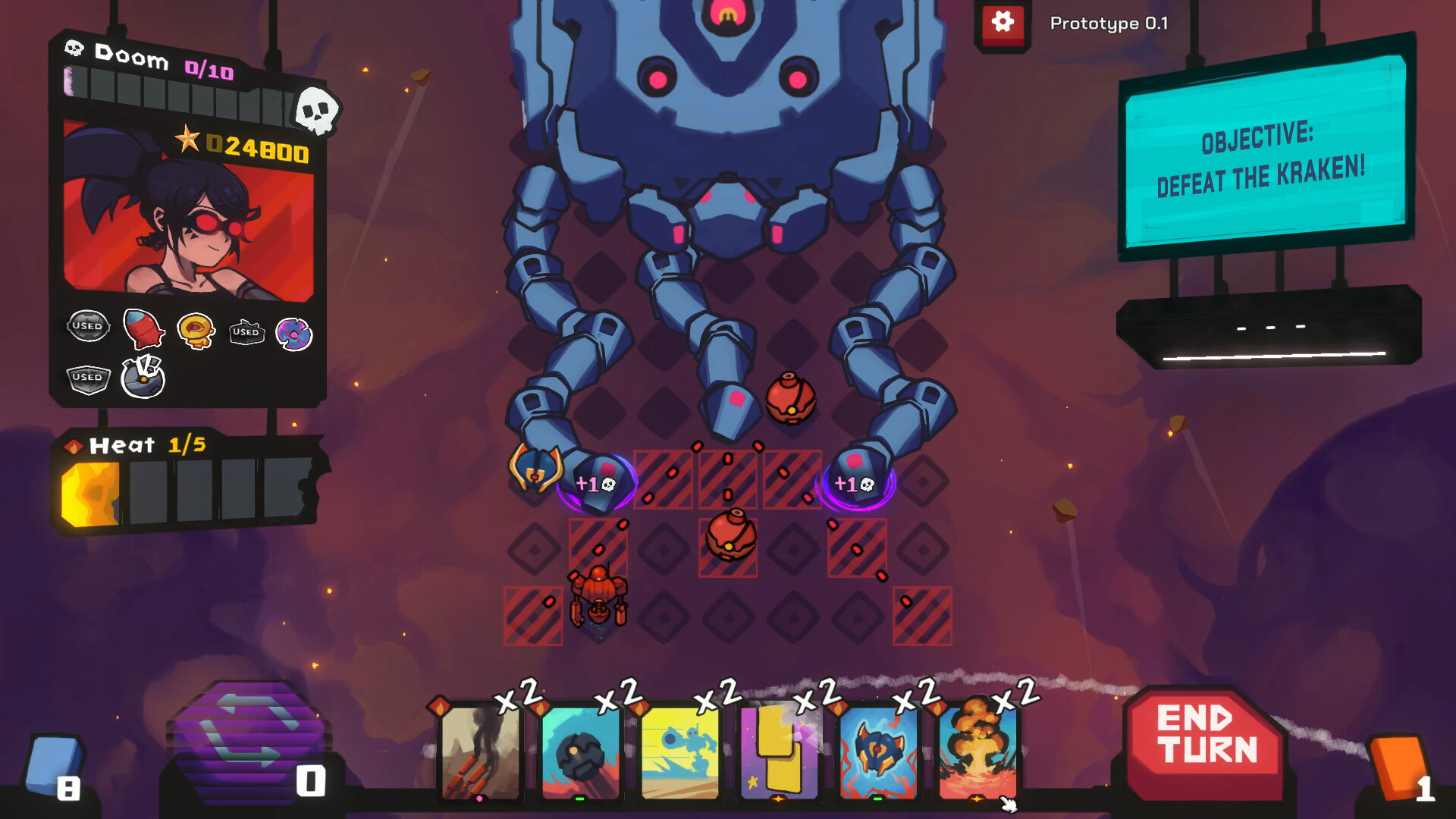
So, I already tried to explain how much I like StarVaders without actually explaining what StarVaders really is… Well… It’s a tactical roguelike-deckbuilder, much akin to Space Invaders with a hint of Into the Breach mixed with Slay the Spire. You have cards you play each turn utilizing different energy systems based on your mech and afterwards the invaders make their turn. If they reach the bottom three rows, they channel Doom with Doom acting as the game’s failure condition – let too many invaders reach the bottom, and they charge your doom meter. Hit 5, and it’s game over.
In essence, it’s a tactical game that makes you think about how you wanna play a game. You draw cards each turn. Some of those will allow you to move in a specified range or teleport somewhere, other cards allow you to strike enemies, place a bomb or judo-toss nearby folks over your head. Each of these cards opens up a multitude of tactical options, encouraging creative problem-solving on every turn.
What adds to the equation is that you have three mechs to choose from, the Gunner, Stinger and Keeper – each one plays vastly different. Different relics, cards, and playstyles. Each mech also has three distinct pilots, each with unique starting decks and relics, adding even more strategic depth and replayability. More than anything, each pilot also has lore… and it’s good stuff, too. Very charming.
With the Gunner, you have to mind your “heat”. Play cards and you’ll amass heat, go over the limit, and your turn ends, burning a card in the process. A burned card cannot be used and ends up clogging up your deck. Some cards, however, want to be burned or will give you extra benefits if you choose to burn them. There are also mechanics that allow you to un-burn cards. The Gunner plays around bombs a bunch, cards that shoot bullets, and more.

The Stinger, meanwhile, is a mech that allows you to throw out cards as projectiles that then can be picked up, and if they happen to be flow cards, they are free to play on the turn you pick them up. Instead of building up heat, you expend energy (with some reserve battery charges in the back of your trunk). Rather than shooting bullets, you play around throws, traps, and slashes. One pilot plays around shocking enemies and slashing them to get energy back during your turn whereas another plays around cards dropped onto the field as booby traps that damage foes as they step on them.
So, I essentially just explained two mechs and two pilots (without spoiling anything about what cool things the Keeper does), and you can see how complex the game can get, possibly. Add to that card upgrades that add bonus effects, relics that let you do unspeakable things to the alien invaders, run modifiers that add difficulty, different enemy types that make you approach each level differently, and a whole slew of bosses that each add more fun mechanics to the game.

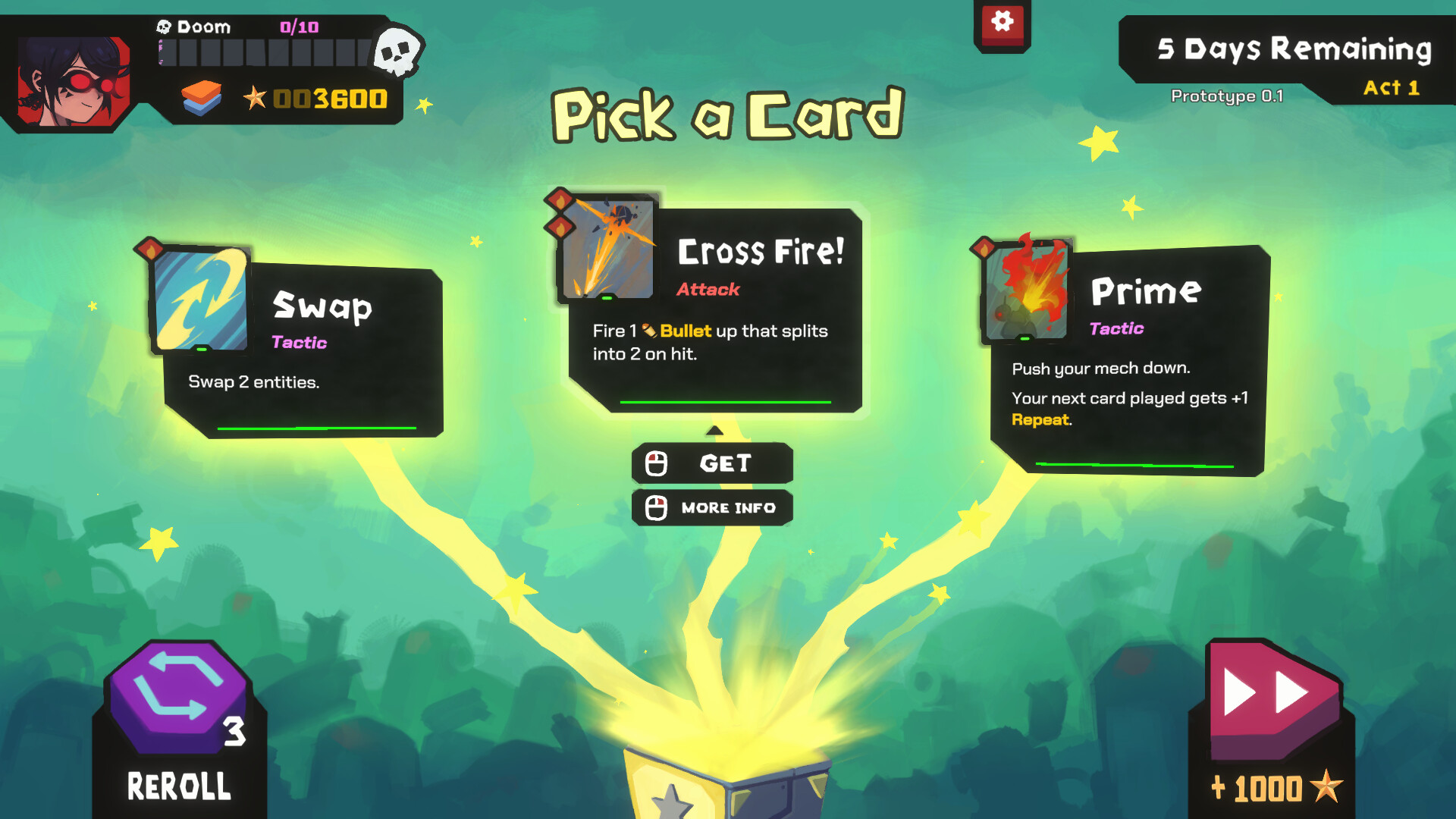
On top of that, each run eventually feels very different due to the packs that get thrown into the mix. Rather than having a chance at getting all cards all the time, you instead are blessed with three packs (out of a bunch) that give you cards, relics and upgrades that synergise with different mechanics. While it limits the card pool, this system encourages experimentation, pushing you to explore new strategies instead of falling back on old favourites.
I absolutely love the game for how much it offers, but I even more adore just how the developers thought about how a new player might feel with all this information. The game smartly avoids overwhelming new players by gradually unlocking cards, relics, and mechanics over time. There are different difficulty settings, a bunch of extra challenges, and with each run, you level up your different characters, unlocking more cards, packs, and relics. It feels intuitive.
Similarly, right-clicking on any card, enemy, or relic will allow you to read all about said mechanic that is mentioned. If you don’t know what a Nova Bomb is, you’ll simply right-click onto the icon and it shows you all the relevant information. It’s pretty nice in that regard.
Something I disliked a little bit, however, was that the tutorial felt a bit unsatisfactory. There is still some learning you have to do on your own. Some things aren’t explained at all (like the deck size having a minimum), so you’ll just figure this out on your own. Similarly, you might sometimes just draw bad, or perhaps you’re faced with an encounter that is just not a good fit for what build you’ve got going… and in that regard, it can, at times, feel like RNG overpowers Skill… but I do wholeheartedly believe that that’s just a problem that roguelikes have overall.

For what it’s worth, most of the time, you’ll have a way out or two – or even three in the form of Chrono Tokens that you can expend to reroll your encounters, rewards or cards dealt. Taking risks is incentivised and often pays out. Contrary to other games in the genre, the hardest part isn’t necessarily to get a run going but rather to stay on track and build up momentum. Deck-Control, getting regular boosts to your strength, and other player-based mechanics are just par for the course here. In that sense, it’s a very rewarding game once you spend some time with the mechanics and the game as a whole.
And god, do the devs make it easy for you to spend a lot of hours in StarVaders, not just with its rich tactical/deck synergies but also the strong art direction, the energetic and very synthy soundtrack, the little story beats you get after each run, and the many trials you have to overcome. If you enjoy achievement-hunting, StarVaders doesn’t merely have you defeat X amount of enemies or collect Y amount of relics or whatever, but actually encourages you to try several wild and fun things.

All in all, I’d say that StarVaders isn’t just another roguelike deck-builder or tactics game but rather a bold reimagining of both genres, delivering a tightly woven gameplay loop that marries the addictive qualities of roguelites with the cerebral satisfaction of puzzle-solving on a grid. It’s fast-paced and deeply strategic. It rewards players who plan ahead and adapt in real time. It incentivises you to try out a plethora of things and exhaust all the options rather than throwing in the towel for one reason or another, and in that sense, it’s a great entry into the roguelike genre.
In a time where so many games rely on imitation (with just so darn many bullet heaven games coming out), it’s genuinely refreshing to see the genuine innovation, the carefully tuned mechanics, and the distinctive voice that Pengonauts offer in the form of StarVaders. It feels like the type of game that I fell in love with when I first got into Indie Games. I highly recommend it. Go check out the game. Do it. Now. Go.
Verdict: StarVaders is a fresh, smart, and highly addictive blend of tactical gameplay and roguelite deck-building. Whether you're a veteran of the genre or a newcomer looking for a challenge, it’s one of 2025’s best indie releases.
This post was originally written by Dan Dicere from Indiecator.
If you see this article anywhere other than Indiecator.org then this article has been scraped. Please let me know about this via E-Mail.
 Indiecator
Leave a comment