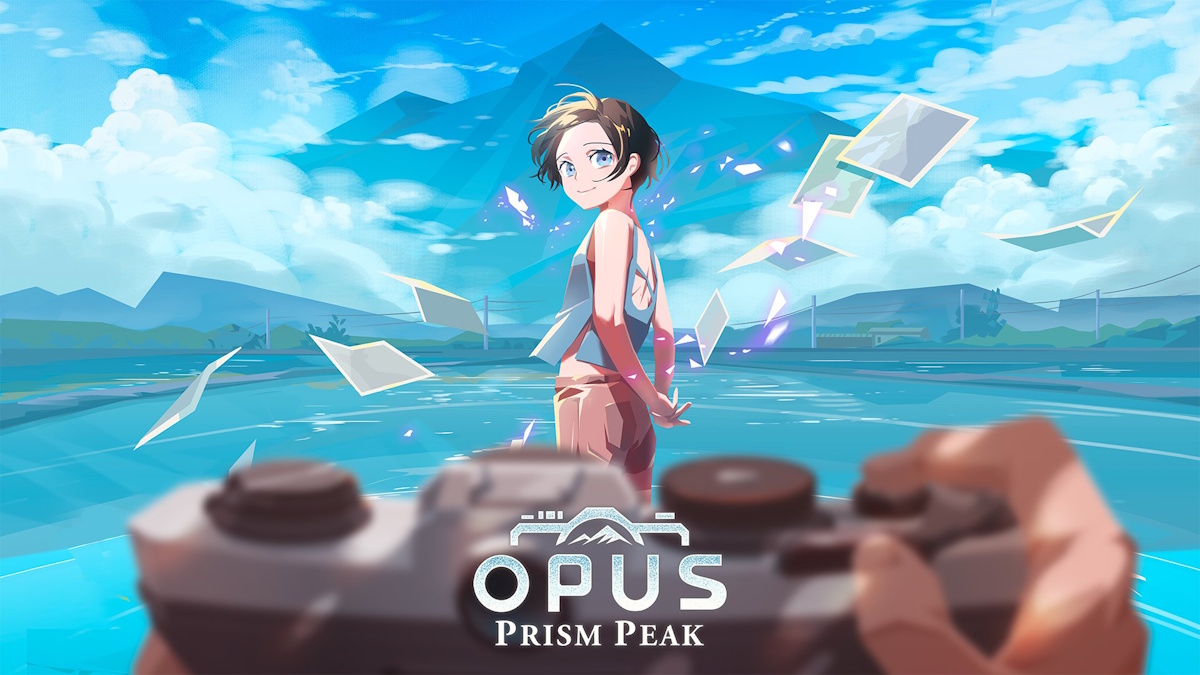
SIGONO’s “OPUS” series has firmly rooted itself in my mind through its heartbreaking stories, the emotional sincerity, and a frankly uncanny ability to make even the coldest person tear up a little. Few studios understand human emotion the way SIGONO does, and OPUS: Prism Peak is yet another shining example of that very gift that the folks working there seem to carry.
Prism Peak is a beautiful, devastating, and completely absorbing tale that I got to play through in fourteen hours whilst glued to the screen, sitting at the edge of my seat, and – admittedly – crying more than once. It’s a story about regret, identity, nostalgia, and self-discovery, and every part of the experience reinforces those themes.
Today, I hope to give you a mere glimpse into why I was so touched by the latest entry in the OPUS series and hopefully showcase just a few facets of the game without (hopefully) giving away too much.
Developer: SIGONO INC.
Publisher: SHUEISHA GAMES
Genre: Indie, 3D, Narrative Adventure, Puzzle, Exploration
Release Date: April 16th, 2026
Reviewed on: PC
Available on: PC, Switch (1 & 2)
Copy was provided by the developers.
Note: While OPUS: Prism Peak is part of a series of games called "OPUS:...", all of the games are standalone experiences and can be enjoyed on their own. I also try to keep this review as spoiler-free as possible.

Meet Eugene, a weary photographer in his 40s who left his small hometown to follow his dreams of becoming a photographer in the big city and whose life just seemed to quietly fall apart. While returning home for his grandfather’s funeral, he’s suddenly pulled into the mysterious Dusklands, a strange spirit realm where memories fade, regrets linger, and a dreadful force known as the Shade threatens each and every existence.
Here, Eugene encounters various wandering spirits, a young amnesiac girl searching for home, and a camera eerily similar to his grandfather’s. His only hope for finding answers and a way home lies atop the mountain where the mysterious Seer is said to restore lost memories and prevent spirits from disappearing forever.
With OPUS: Prism Peak, Sigono is ditching their 2D/2.5D cosmic sci-fi for something much more grounded and intimate. Forests, abandoned factories, urban ruins, movie theatres, and quiet city streets create a world that feels both deeply familiar and dreamlike at the same time. The shift in tone works wonderfully, I find, to convey the themes of the story and give you a sense of adventure much like Echoes of Starsong (the prior entry) but less removed from reality, and I’m here for it.
All of this is also, mind you, supported by absolutely breathtaking visuals and an absolutely phenomenal soundtrack by Kevin Penkin, whose music fills the Dreadlands with melancholy and warmth, elevating every emotional moment to the next level… as he tends to do. I’m a huge fan, haha

What makes Prism Peak truly stand out, however, is how personal it feels. This isn’t simply a narrative adventure or walking sim but rather a game about piecing together a story in a way that makes sense to you, as the player.
Each playthrough can be quite different, with various endings available to you, and I really loved how central to the experience photography as a medium is: You capture people, objects, landmarks, and statues to piece together the world’s mysteries and uncover connections between its resident spirits and Eugene himself.
As you progress through the game, your camera evolves with new lenses, filters and even manual controls, turning photography into one of the game’s most satisfying mechanics. Taking pictures didn’t really feel like a gimmick but rather as if it were your tool to navigate the world. Paired with it, you’ve got your field notes that allow you to research the world, decipher its alphabet, uncover hidden lore, and also further connect what these spirits mean to you specifically.
There’s a level of discovery here that reminded me a lot of Obra Dinn. It just “clicks”, very much like the shutter of your camera.

The game’s greatest strength is probably how it handles mistakes, though. Prism Peak doesn’t just talk about regret but rather actively makes you live with your decisions in a way that feels rather meaningful. Misunderstanding characters or drawing incorrect conclusions can and will lock you out of learning more about these very spirits, and the game rarely tells you when you’ve missed out on a puzzle or made a rough choice.
This felt kind of frustrating at first, but over time, I realised that this is very much frustrating by design. You’re supposed to regret making haphazard decisions or move on too quickly, similar to how you regret those same things in the real world in your own life.
Prism Peak understands that regret isn’t always about catastrophic failure. Sometimes it’s saying the wrong thing even if there was no right thing to say, sometimes it means misunderstanding someone, or realising too late what truly mattered in the first place. The game trusts you to sit with those feelings instead of correcting them, and that emotional honesty hit me harder than I really expected.

The game isn’t flawless, of course. The notebook can become rather cumbersome to navigate, especially with the amount of page-flipping required, and the in-game alphabet deciphering doesn’t always lock in symbols you’ve deciphered correctly, perhaps in an attempt to stop brute-forcing attempts.
I also wished for more space to take pictures, honestly.
Like, we are in a magical realm outside of the bounds of reality, and having to clear up photos and sometimes let go of some we really liked, while in line with the themes of the story, felt bad. Period. I also wasn’t always sure which album pages were important for puzzles and which weren’t. It’s not made abundantly clear, as the photos you present to the totems in the game are all grouped up together, but there is a distinction between “extra shots” and key photos in the actual album. I wish this had been explained a bit better.
These are very minor frustrations in the grand scheme of things, of course, but it’s still worth pointing out, in my opinion.

That being the case, these complaints don’t really diminish what SIGONO accomplished here for me. OPUS: Prism Peak is haunting, heartfelt and painfully honest in all the right ways. It’s a deeply human story about grief, regret, nostalgia and learning how to move forward when life refuses to go the way you planned. Few games have affected me this much personally, and OPUS: Prism Peak just hits so very close to home for me. It’s a fantastic experience that I wholeheartedly recommend playing.
Verdict: It's no wonder that this game has PEAK in its name. It very much feels like SIGONO's other works but more grounded in our reality, with less of its cosmisc themes and more of an earthy yet spiritual undertone that really works well to convey its topics. OPUS: Prism Peak is a beautifully-crafted utterly cataclysmic experience that will make you laugh, cry and sit at the edge of your seat. It's a story about nostalgia, regrets, and finding new meaning when nothing's going well, and I absolutely adore it for what the developers accomplished with this game. This might just be my game of the year.
This post was originally published on Indiecator.
If you wanna get in touch with me, feel free to stop by for one of my Twitch streams. For business inquiries, please reach out via email.


Leave a comment