

Today I wanted to talk about this thing that some developers do that really bothers me whenever I encounter it. A while back, I did a series of posts on mechanics I dislike in games, like contact damage and timers… this one goes into that sort of direction.
What is Artificial Difficulty?
Artificial Difficulty describes the phenomenon of games being harder than they have to be due to developers padding the game using cheap methods. In a lot of older games (especially Arcade games), the playtime for a playthrough was often too short which is why developers would pad the game using an increased difficulty, lowering the player’s damage and increasing the enemies’ health pool, so that players would struggle to beat the games in the first place, extending the playtime considerably.
I believe that these methods are not inherently bad. One could argue that it’s all part of balance… but in my opinion, they hinder fun and can even lead to frustration.
Artificial Difficulty
The most common methods of creating such inflated difficulty include but are not limited to designing certain aspects of a game in a specific way to ensure that the player spends a certain amount of time on that aspect, tinkering with the controls, physics or camera to ensure that players have to master said elements before they can proceed with the game, and communicating mechanics properly.
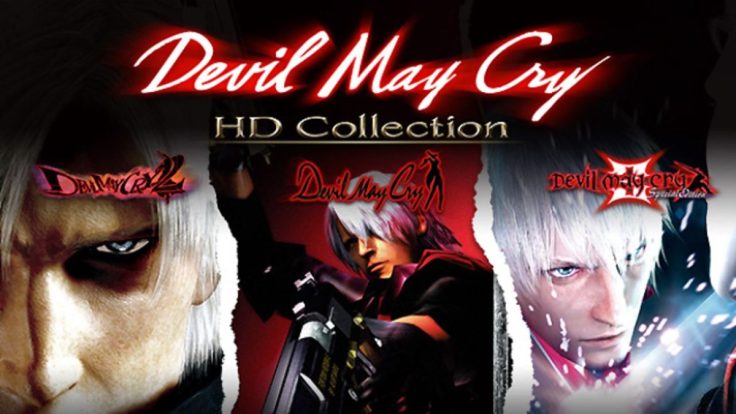
Devil May Cry 2’s damage sponges
A while ago I played Devil May Cry 2 for the very first time and I actually enjoyed it a fair bit… until I didn’t. The reason why I didn’t like it anymore was that starting at the half-way mark of the game, the difficulty ramped up quite considerably… but it was manageable.
It wasn’t a skill issue, so to speak, but rather that individual sections of the game took just incredibly long to beat, to the point where I debated playing something else entirely. Again, not a skill issue… the enemies were just bullet sponges and had plenty of lengthy animations that would result in me having to wait extensive periods of time until they can be hit again.
One time, there was this helicopter that was chasing me – a very cool idea, I thought – but after I destroyed it (after a long time), it just respawned in the next section, meaning I was never meant to beat it in the first place and the game never communicated that to me.
I struggled for a long time not because my skills or stats weren’t high enough but because the enemy had very few windows where it could be damaged and just way too many hitpoints. It’s frankly exhausting.
Destroy All Humans 1’s Escort Missions
Destroy All Humans is a pretty cool series of games but quite honestly, the first game was just bad.
A while ago, the first game was remastered and ported to PC which I was pretty excited about but it left me with a bad aftertaste after I finished game in only eleven hours… I paid 30 bucks for it. Now, basing one’s money’s worth on playtime is a tricky subject, of course, but in this case, I essentially had to deal with janky controls, many bugs that were in the original release, too, graphics that weren’t touched on at all, and more than anything, game elements that were stretched beyond belief.
One such example would be the escort missions where the AI of the wagon you’re escorting is incredibly stupid and will just move forward or stay in place when under fire. You have to protect it. If you don’t, you’ll have to restart all over again from the get-go.
I spent an hour or two on this singular mission because of how badly made it was… but if I had breezed through it immediately, I would have had even less playtime for thirty bucks.
This is a prime example of leaving games’ design choices janky in a remake for the sake of stretching the playtime. There were many other examples of fights or missions in Destroy All Humans 1 that were simply bad… but that one stuck with me to this day.
Diablo Immortal’s Gambling (RNG)
“Don’t you have phones?”
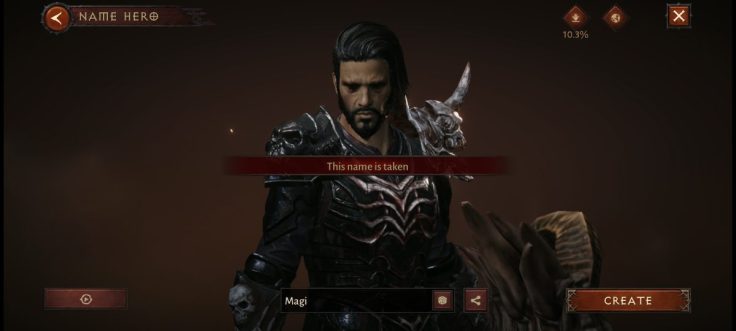
Diablo Immortal released a while ago and I did previously write about that one as well, so I’d imagine that folks probably know what it is and all that already… but just in case you’re wondering: It’s Diablo but on mobile (also playable on PC) but it’s not instanced anymore, the content is gated heavily by invisible numbers and the title featured this currency you can buy to get increases odds of legendary gear dropped from a dungeon. That’s not a guarantee, btw, but increased odds.
As such, the game is basically just a gambling simulator at that point where you pay so that you can increase your chances of getting gear you might need to progress with the game… only to then have it not drop for you so that you have to pay up even more.
If I remember correctly, some gear couldn’t drop in the first place unless you paid for it…
But in the broader sense, developers can use RNG and drop chances to increase the amount of grinding necessary in games to inflate player numbers and player time. It’s a thing that exists in games and especially when you pair these random drops with difficult enemies who deal a ton of damage to you and are hard to kill due to inflated health pools, not to mention hard-hitting attacks, you’ll end up with an incredibly bullshit scenario where you need better gear to advance but you cannot advance because your gear is not good enough to grind the materials that you need to craft the better gear that you need to advance.
Grinding can be done well, though. Games like Hardspace Shipbreaker and Monster Hunter do show how even the most repetitive tasks can be rewarding.
Monster Hunter’s fights also feature lots of variety with different monsters spawning into missions, enemies having different movesets and you having the opportunity to tackle them in more and more advanced ways as you improve at the game and master your weapons.
Meanwhile, Hardspace Shipbreaker has you pay off a debt but the “tedious” nature of the game is just what I need after some busy and exhausting days.
Frankly, grinding doesn’t have to be done well, but the way that Diablo Immortal does it is predatory. Imagine wanting to play the game for free without paying a single dime… Well, in that case, you better do the same dungeon hundreds of times with your very simple kit that was designed for mobile and you better have some good RNG on ya.

Inflated Technical and Communicative Difficulty
At last, I wanted to mention technical difficulties that make games harder to beat or take longer at least as well as communication elements that drastically increase the difficulty.
For technical stuff, janky controls or a camera that moves constantly and stops you from backtracking can be introduced to make people spend a lot of time in your game. Similarly, leaving controls “weird” and “janky”, like in Getting Over It, can result in increased difficulty but as I previously mentioned this doesn’t have to be a bad thing.
If you think about all the side-scrolling levels in Super Mario, you wouldn’t find those challenging if they weren’t side-scrolling levels. The side-scrolling exists so that you cannot take your time and so that you cannot backtrack to grab a power-up or something. It’s a conscious design choice here to increase difficulty artificially but in a way that is engaging and fun!
Sometimes, however, games also fail to communicate information properly. Think of the original Rogue, for instance, which featured potions and spells that you had to identify first but those identification items would also be scrolls that you had to identify first. So by trying out these potions or scrolls without any clue as to what they could do, you’d learn that they’re for identification or a fireball or healing or whatever… and then you’d use them to identify other items.
The Binding of Isaac, too, features elements that obscure the effect or meaning of mechanics and items. Hitting the cursed room spikes a number of time, for instance, might get you a “you are blessed” which will increase your odds of getting an angel deal… but the game doesn’t tell you that. You simply know that you’re blessed unless you google it.

Item effects, pill effects, card effects, etc. all are pretty vague, for the most part, which adds to the difficulty unnecessarily. Honestly, I’m glad that mods exist and that the External Item Description mod doesn’t disable achievements.
Yes, of course, a very good players know what each item and card does but why does mastery have to be gated by a good memory?
I think that the game is hard enough, as is, and at least on a design-level that specific aspect of the game with the obtuse descriptions is pretty bad… although it does add to the narrative, I guess, in a way.
Anyway
I just wanted to ramble a bit about this. There are many other ways that people inflate the difficulty, including timers and damage checks, but those up there were a few that I could list personal examples for.
This is very much a fluff post since I’m currently fourteen posts behind on Blaugust. Whoops.
With that said, I do think that it’s important to talk about all this a certain degree because some of these factors can severely limit how many people can enjoy these games. It’s an accessibility thing.
For instance, if a fight drags on for long, people that have hand impediments could end up having to drop out of the fight due to the fact that their hands cramp up or their fingers cannot input commands over and over again into a gamepad just because the developers decided to add tons of HP and super armor and whatnot to bosses. Just as a very vague example.
Extending a boss fight’s time to complete just for the sake of giving players a “challenge” isn’t fun, either. If you barely deal any damage, it ruins one aspect of why games are fun. All your grinding, your theory-crafting and strategizing, as well as your mastery over your character, are for nought because each slash and bash only tickles the boss in question. And that sucks.
How do you feel about artificial difficulty?
This post was originally written by Dan Dicere from Indiecator.
If you wanna get in touch with me, feel free to stop by for one of my Twitch streams. For business inquiries, please reach out via email.
 Indiecator
I didn’t like that mission in DAH either where you had to escort the nuke and there were just so many soldiers coming from all over. The final boss was also a pain too but it was still a fun game to a certain degree.
LikeLiked by 1 person
Yeah, the final boss was stupid… And like both that and the escort mission stretched my short playtime considerably. I felt scammed at the end more than anything
LikeLiked by 1 person
The mission where I had find a specific disguise to access a certain area and give a speech as the mayor was also hard too. I just wanted to kill people in this game not this.
LikeLiked by 1 person
Iirc DAH2 was better…but that’s through nostalgia-tinted glasses since I loved it on the og xbox. Haven’t played the remake yet…
LikeLiked by 1 person
I don’t mind a bit of challenge in games. But I’m not fond of game designs that require repetitive attempts to master some kind of monster or boss-specific mechanic.
This means that, for me, the Souls-like games are not very fun. It isn’t a matter of ‘git gud’: I understand the process quite well and can respect the craftsmanship in the games. But I have little interest in dying a dozen times in order to overcome the unique move-set of a specific foe. I play to experience an interactive story, not develop precision reflexes.
But for some people the Souls-like games are 10/10, 100 / 100 best-games-ever experiences. For me they seem like they are artificially padded, but to the folks who love them the padding is the point. To each their own, I guess.
LikeLiked by 1 person
I was going the mission in DAH escorting the nuke would’ve been toned down in the remake, but it wasn’t.
I haven’t gone back to that game for a while it had annoyed me too much.
LikeLiked by 1 person
I always used to think that porting a game was difficult and that developers would also update the graphics and make changes, fix bugs in the new engine and possibly even add new content to a game… but as it turns out, they take the same flawed game they had on consoles and just attach “remastered” to it to then ship it to PC, as is, with all the elements that didn’t age well in the last twenty years, gameplay-wise.
So, yeah, they just left it as is in DAH and it was incredibly frustrating and annoying to deal with, so I feel ya. I ended up playing through the whole game but it just felt very frustrating in the end… and again, I felt robbed at the end of my whole playthrough.
LikeLike