
Steam Next Fest is nearly over and as such, I just wanted to write a little post about my favourite demo from this year’s Fall Edition… StarVaders.
I’ll have an additional Wrap-Up post releasing in the next few days once I find some time to work on in between uni lectures but I just really wanna rave about this release right here, right now, so that you perhaps also download the demo real quick and get as addicted to it as I am.
On a quick little note before I tell you why I love StarVaders so much: The developers are hosting a 100 Steam Key raffle at the moment for people who manage to beat the demo with three pilots in the game. Steam Next Fest is still around until 10 AM PT / 7 PM CEST, so you better hurry if you wanna participate in that!
What is StarVaders?
StarVaders is a tactics and roguelike-deckbuilder hybrid with grid-based movement and card-based combat where you fly to different locations on your planet to defend humanity against the space invader thread.
For your efforts, you’ll be rewarded with credits, artefacts, card rewards, component upgrades for cards in your deck and more. When you fail, your run is over and you’ll earn experience to unlock new cards for your pilot.
There are currently two mechs in the demo, the Gunner and the Stinger, with at least one other mech being added to the full release in Q2 2025. Each mech comes with a specific playstyle but also three sub-classes in the form of pilots that further change up how you approach the game and what cards you’ll find which adds further twists to the game and is really cool.
That said, the game itself plays on a grid and from the top, enemies are invading which will shoot at you, add objects to the field, or which have other traits to watch out for. When they move down into the bottom three rows, they will generate “Doom” if left alone for a turn. If your Doom gauge fills up completely, the run ends.
Hence, you’ll have to take care of enemies swiftly by moving around, pushing them around, or shooting/striking them.
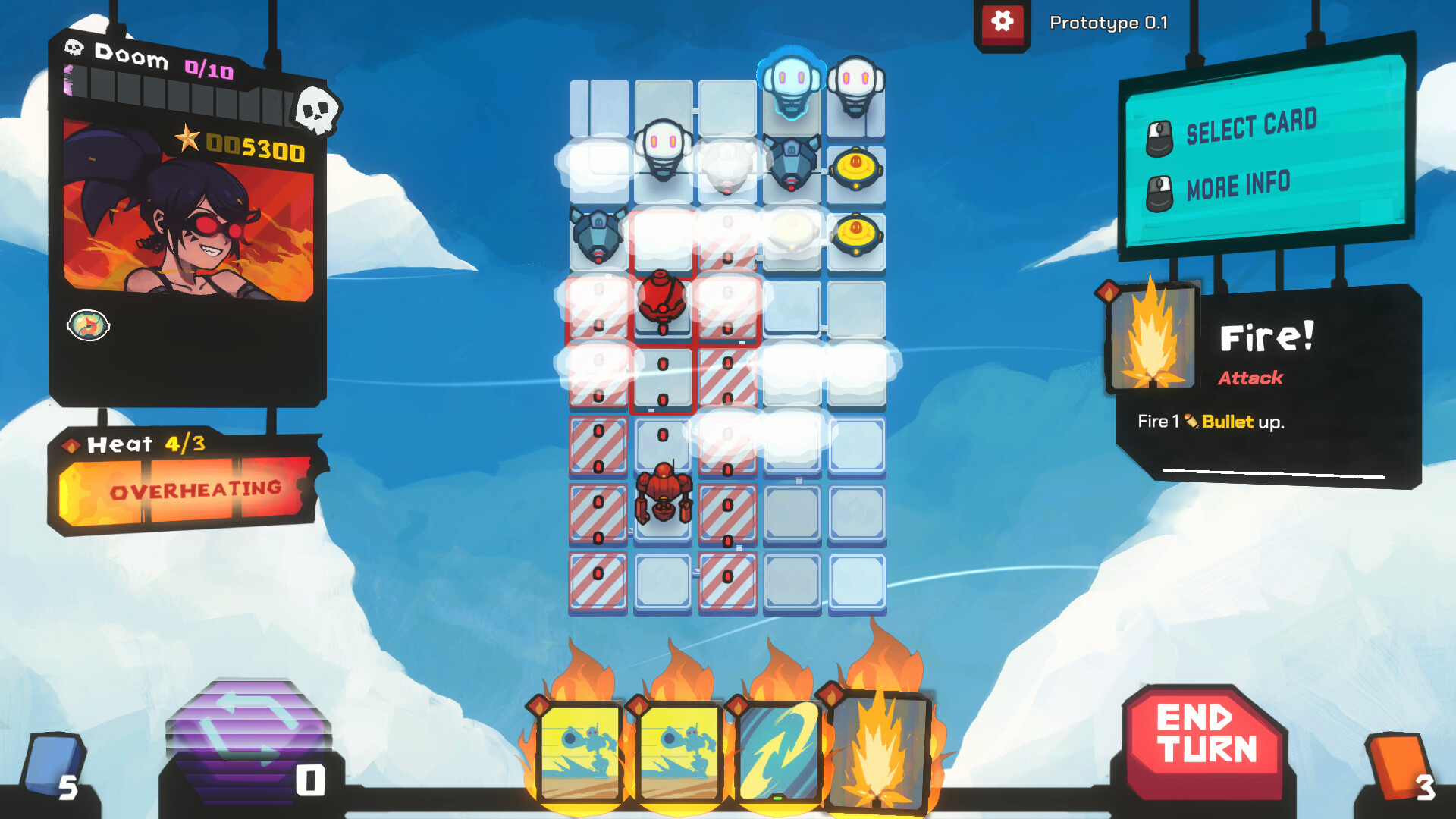
There are a lot of mechanics to watch out for but I personally really enjoyed how the game approaches and explains them to you.
The tutorial was quick and easy, the UI really helps visualize what your actions and specific keywords do, and overall, I found it pretty easy to get into, especially if you’ve played roguelike-deckbuilders before, even if it does sound rather complex overall.
Synergies, Synergies, Synergies!
Now, if you’ve followed me for a while here, you might know that I love synergies in games – and if you haven’t, then, now you know.
Synergies amongst items, abilities, boons or whatever are just so satisfying to put together. It’s not just the in-run aspect of finding an incredibly overpowered combo, like putting the “squirrel” totem head onto the “magpie” or “ants” sigil totem body in Inscryption or find “Duo” boons that crowd-control the hell out of Hades’ minions while spamming doom-blades onto their brittle bodies in Hades. No, of course, that’s satisfying, but the theory-crafting aspect of the perfect run and the joy of sharing ideas and cool builds with other people is something that I value a lot.
And StarVaders handles that really well with lots of unique archetypes in each card pack that then also might synergize further with your artefacts and your mech’s and pilot’s playstyle.
I had this one run (embedded below) where I essentially centered my whole build around the idea of summoning and exploding bombs as Roxy, one of the Gunner’s pilots.
I had no bomb limit. Each encounter, I summoned Nova bombs onto the field. I’d explode them multiple times and resummon them with one card. Each bomb that explodes would also shoot a bullet.
I also had a card that would do the same thing, shooting a bullet from each bomb and myself forward… but then I picked up a relic that turned me into a bomb, too, and as a result, I would shoot two bullets from myself and one from each bomb.
Overall, it was an explosive run and I just had a blast with it.
But I also had an artefact that made it so that all bombs move up a tile at the end of the turn, resulting in utter carnage when I realised that since I’m a bomb, I’d move up, too. This meant that I’d have to factor that into my movement as well when dodging hazardous tiles which completely changed how I’d approach movement overall.
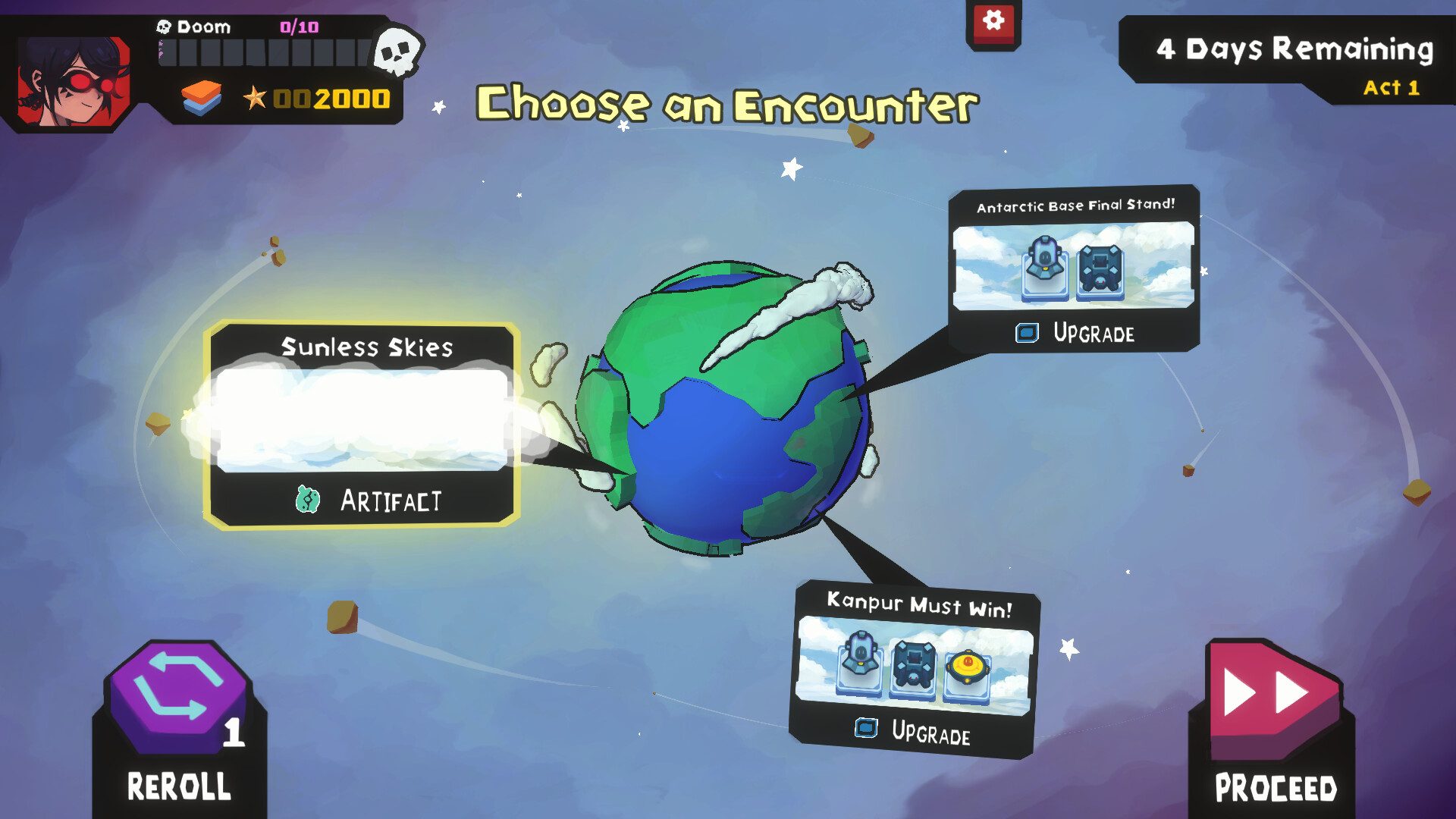
But also if you’re looking for a very specific build, that also influences what path you move onto, what rewards you’re hoping to get, what risks you are willing to take, and the like. It’s something you see in most roguelike-deckbuilders but it feels just very satisfying in StarVaders in particular!
On the Stinger mech, I did a run where I focused a lot on the whole “picking up” mechanic where you throw out cards that you then pick up to bring them into your hand, and if they have the “flow” keyword, you’ll end up able to play them for free.
One artefact I had was one that allowed me to strike units around me whenever I picked up a card, so my mission was obviously to have a deck that allowed me to move around and throw cards a lot while cycling through my cards frequently… but I failed to remove enough of my deck to facilitate that sadly… but it’s probably possible, and I’m really looking forward to making something along those lines work!
Dashing around like a ninja, throwing kunai and slashing enemies whenever I pick those up. Like a Shiv-build in Slay the Spire… but less static, I guess?
But there is also a world where I focus on gaining energy and drawing lots of cards to then play them for free or dashing around cleaving units in my path, and the like. There’s a load of archetypes specific to each mech, and I can’t wait to find out more!
Great Design!
The presentation of StarVaders is also something that really got me excited! Games don’t have to look great to be good, of course, but it certainly helps – and this one’s VFX, general art direction, character and enemy designs, and just overall “drip” is definitely right out there. For a game that is supposed to be played multiple times, especially, you need to have a certain degree of stylization, and StarVaders definitely is a sight for sore eyes because of it.
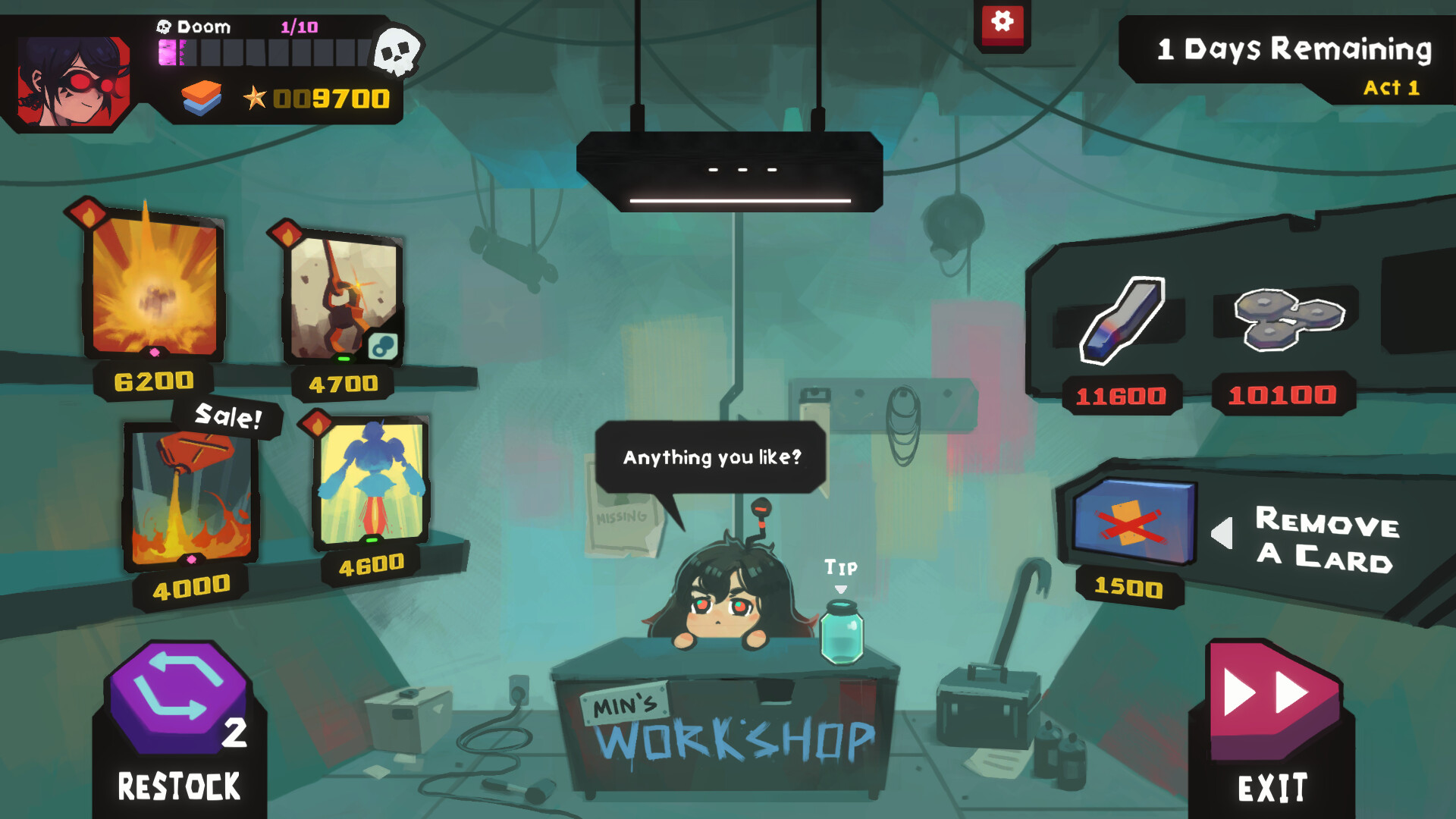
Accompanied by a fantastic sorta chip-tune-y soundtrack to boot, I can’t help but get excited!
But when I speak of “great design”, I don’t just think of the art direction of the game but also the way that gameplay systems interact with each other.
Take the Gunner, for instance, and its heat mechanic. It’s not just a “mana” (or I guess “reverse mana”) system but has actual implications for your gameplay besides the “end your turn” bit. You build up heat as you play cards during your turn. Some cards do so more so than others while some cards might not even be playable without you overheating… and there’s also free cards that are still balanced around generally weaker or just one-off effects.
Once you reach your maximum heat sink level, your next card will get burned, rendering it unplayable for the rest of the encounter. This means that you can still play a card despite having no more heat capacity but it comes at a cost.
Similarly, there are ways to reduce and even reset your heat gauge, but you’ll have to possibly add those to your deck which creates deckbuilding problems like “not drawing the card you need” or “cluttering your core strategy with very situational cards”.
On top of that, getting hit doesn’t do “damage” in the traditional sense but instead adds “junk” cards to your deck that need to be purged by spending heat on your turn. Hence, you’ll need to avoid hazards, plan ahead accordingly, or just try to end encounters before you get to that point. Some “junk” cards even can have separate effects that activate when you leave them in your hand, like increasing your Doom gauge or shielding enemies.
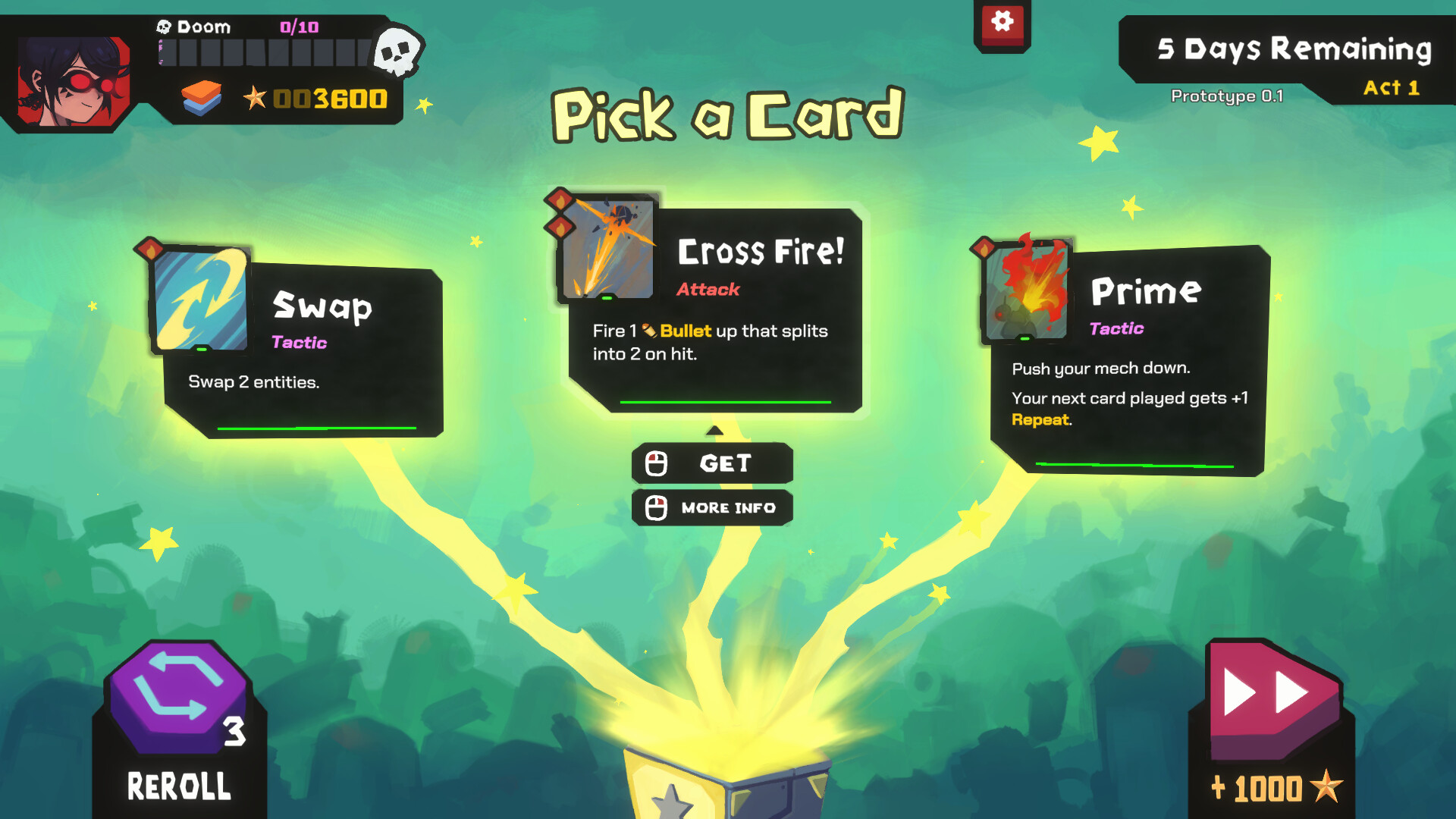
And unlike other roguelike-deckbuilders, there is no health meter but “health” (in the form of Doom or rather a lack thereof) is still a resource.
Do you focus on only the enemies that are about to generate doom or do you thin out the crowd that will move afterwards? Do you move out of the way of impending hits or do you bear with the junk cards to be able to set up your next few actions?
It affects how you approach the individual encounters and as a result, you’ll end up playing around Doom as a resource in a way… even your encounters after your encounters are affected by this since some of them might reduce your Doom gauge – and then you have another choice to make: Do you take this reward that also reduces your Doom gauge or do you take another reward instead that will possibly help you mitigate future Doom gain, like card removal, a new tactics/attack/movement card, or even an artefact.
Other games have this to a degree, too, especially when you see what a “path” (like in Slay the Spire or Peglin) holds in store for you but since there is no such thing as a path system in StarVaders, your decisions feel a bit more impactful, in my opinion.
Releasing in Q2 2025!
As you might be able to tell, I’m very excited about StarVaders and would love to see more of it as soon as possible. I’ll most likely end up uploading more runs onto my YouTube channel and give updates on it over time.
If this post got you interested in the game, make sure to check out the demo yourself while it’s still up, and go wishlist the game! Wishlisting is a great way to support the developers at no cost at all!
This post was originally written by Dan Dicere from Indiecator.
If you see this article anywhere other than Indiecator.org then this article has been scraped. Please let me know about this via E-Mail.
 Indiecator