
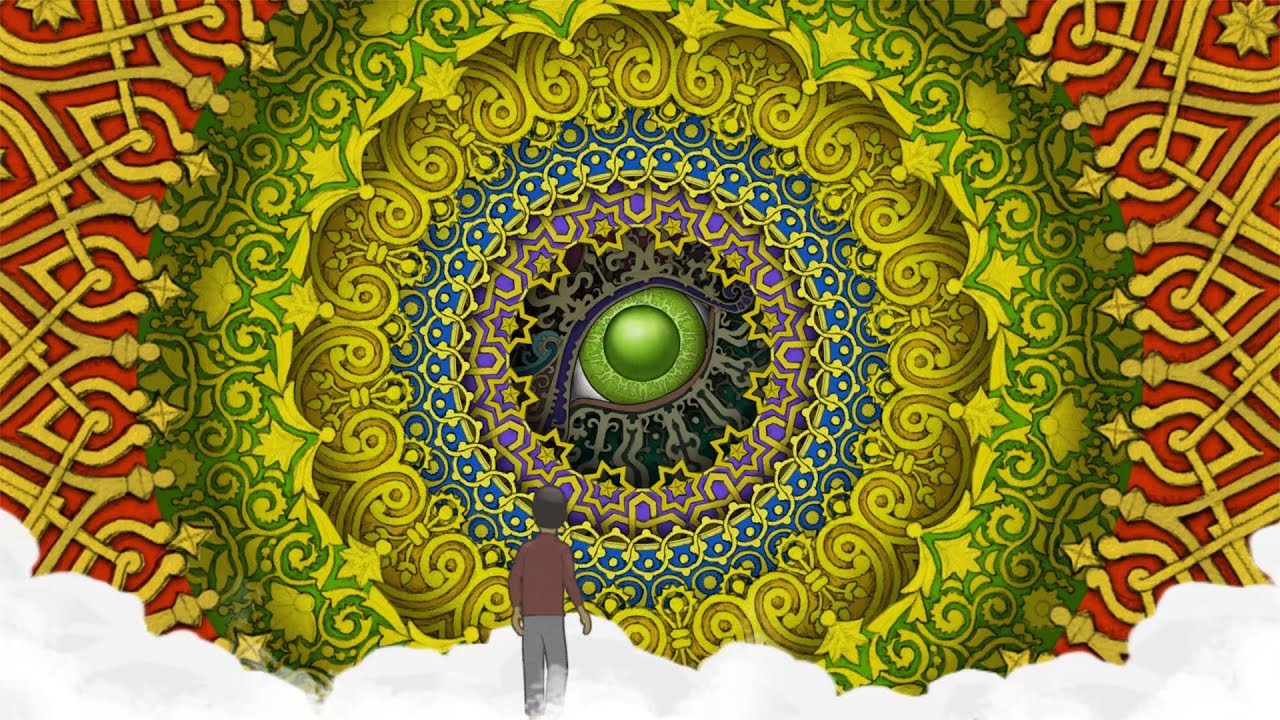
When I was a kid, I used to go into our local mountains together with my younger siblings and we’d chase after imaginary goblins and dragons. I would tell them stories about these fantastical creatures and we’d play a lot out there. Nothing gave me more joy than seeing the bright smiles on my siblings’ faces as we explored the creek nearby, hunted for ghosts in the abandoned hospital, turned into explorers of the mountains and foraged for berries in the forests.
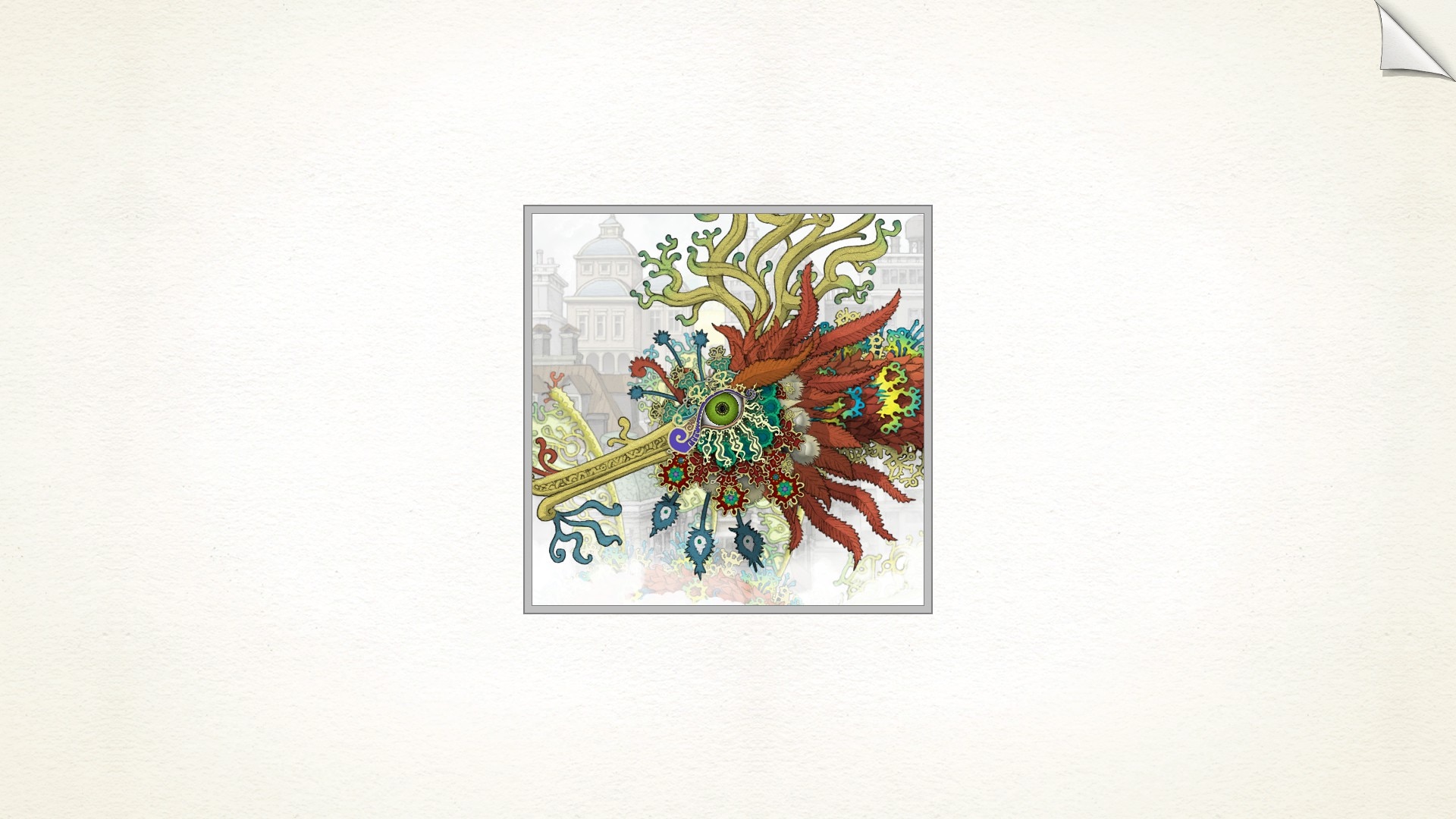
No matter what happened, there was always this fantasy world to retreat into that would spark hope and joy for me and my siblings. In good times and in bad times, we’d go on silly little adventures to distract ourselves and we’d return covered in mud back home, only to get an earful from our parents.
I miss those times. The good times. My siblings don’t remember half of it, they’re all grown up already and all that’s left of those times are the memories, I guess. This distant sense of nostalgia.
Gorogoa is a hand-drawn and beautiful puzzle game that tells a story that reminded me a lot of that. In Gorogoa, a young boy grows up in a war-torn country and lives through the scarier times and the revival of his country by escaping into these fantasy worlds and long-forgotten stories, imagining this huge seadragon-like creature that he’s chasing after.
Hence, I today wanted to talk a bit about this game and how it made me feel as well as why I think that many others should also check it out for themselves.
Developer: Buried Signal
Publisher: Annapurna Interactive
Genre: Indie, Narrative-driven Puzzle
Release Date: December 14th, 2017
Reviewed on: PC
Available on: PC (Win, Mac), Switch, PS4, XB1, XBS, Mobile (Android, iOS)
Copy was purchased.
Right from the get-go, I haven’t seen a game quite like Gorogoa at all yet. It’s serene and reflective and innovative. It’s truly one of a kind.
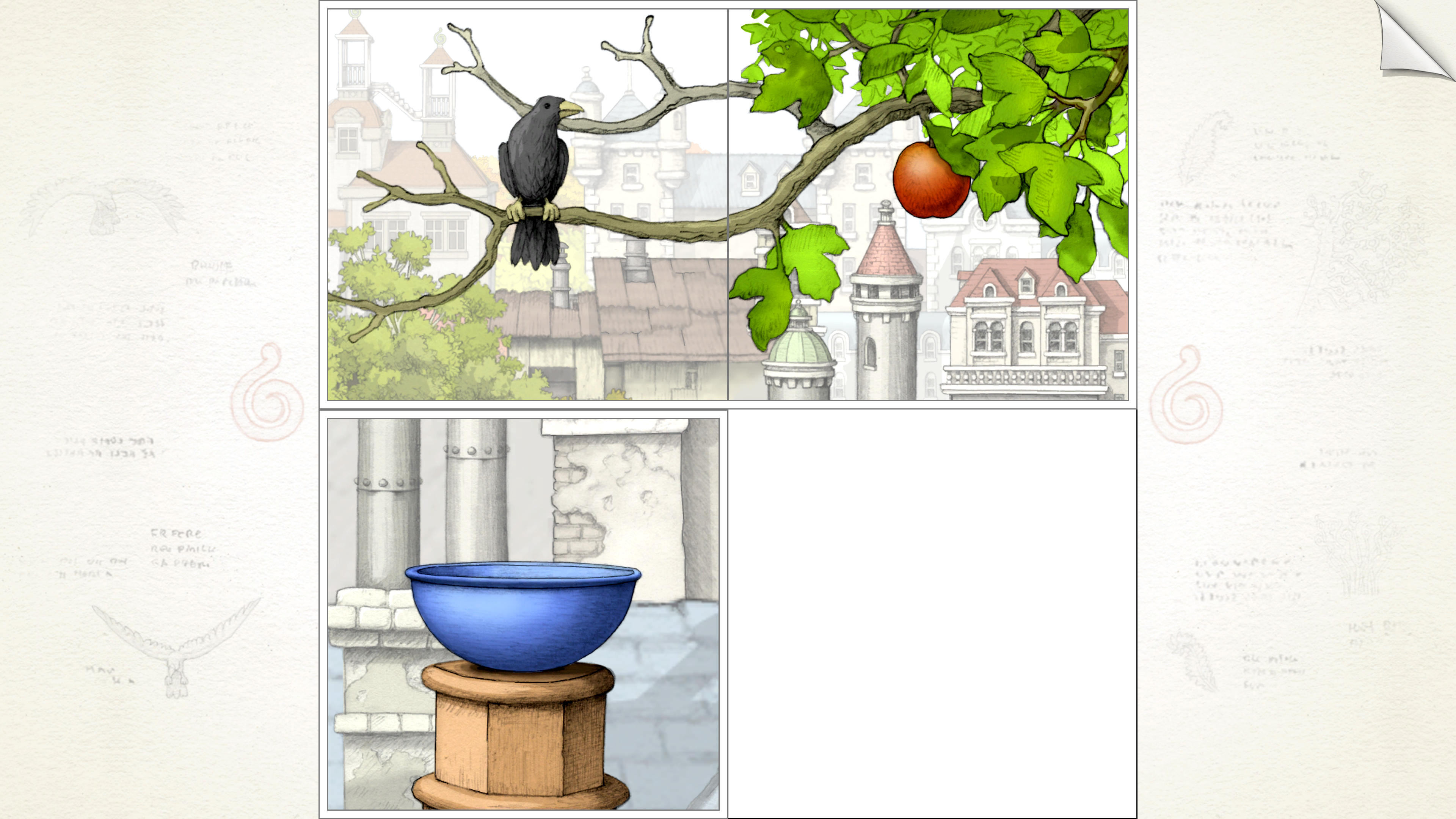
In a small window featuring beautiful hand-drawn art illustrated and designed by Jason Roberts, you’ll find four drag-and-drop panels that you can move around as you please, arrange them in various ways to interact with them, combine them, uncover new panels and even completely erase old ones.

You might zoom in and out of these panels, move inside of them, and by combining them or arranging them just right, the illustrations come to live, revealing stories straight out of some abstract children’s book or parts of the boy’s life as he goes through the various stages of his being.
It’s very intriguing and whimsical, at times ambiguous, at times more clear, at times perhaps a bit more compact and normal and at other times rather wide in terms of perspective but never overwhelming.
In one of the earliest puzzles, you find a tree, for instance, with a raven on top of one of its branches. In another panel, there’s this apple on a branch. Put together side by side, the bird flies off and the apple falls down, ready for you to collect it.

Another time, there is a loose shelf that acts like a scale, so you move the panels so that the inside of the images on the boxes on top of the shelf show heavy objects or lighter objects, hence manipulating the scale accordingly so that you can then ignite a lamp or do other things with it.
There are even puzzles that are more involved, requiring you to time things well or to move panels in a somewhat quick (though still very relaxed) manner, like when I had the boy climb a ladder that went out of frame to then add some railroads to the panel above so that the boy climbs up there, too, only to then exchange the ladder in the panel below for another one.
It’s super cool to see games like this have layered mechanics that work and fuse with each other so well!
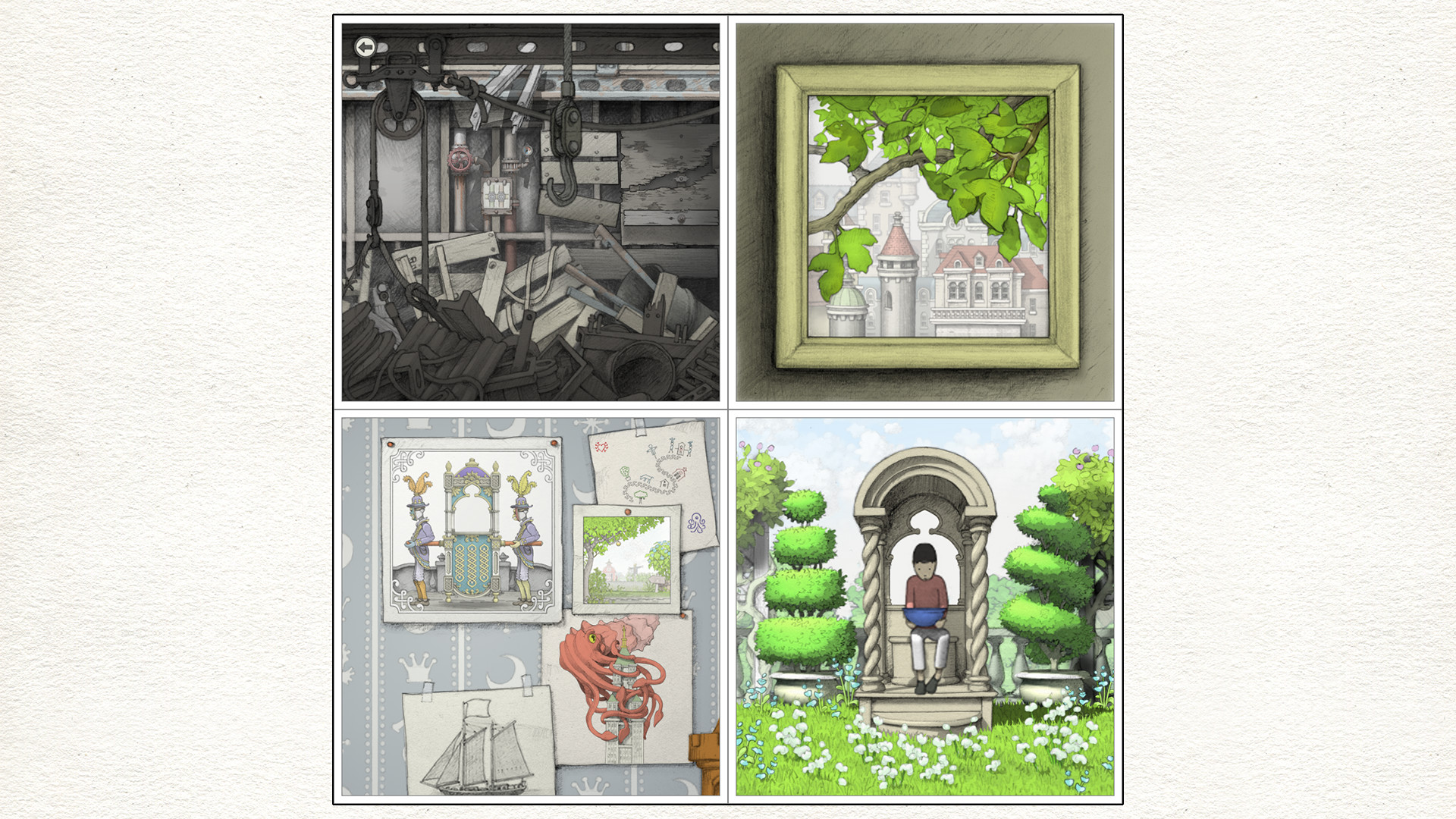
Gorogoa has a lot of very interesting puzzles inside its short (roughly two-hour) playtime and it doesn’t overstay its welcome at all. It manages to captivate you with more and more interesting applications of its gameplay systems without ever getting too obtuse. Yes, it can get a little complicated at times but the puzzles vary a lot in terms of complexity.
In one puzzle, for instance, you might take away a distant star from an image using the vignette of another to then use that to reignite a lamp, in another you use the heat from one panel to manipulate another so that you can then get a certain position in another panel of yours so that you can manipulate time itself.
You might notice how I’m struggling to describe these puzzles without giving away explicit solutions or anything. It might not make sense to you right now but I assure you that you’ll understand when you play the game.
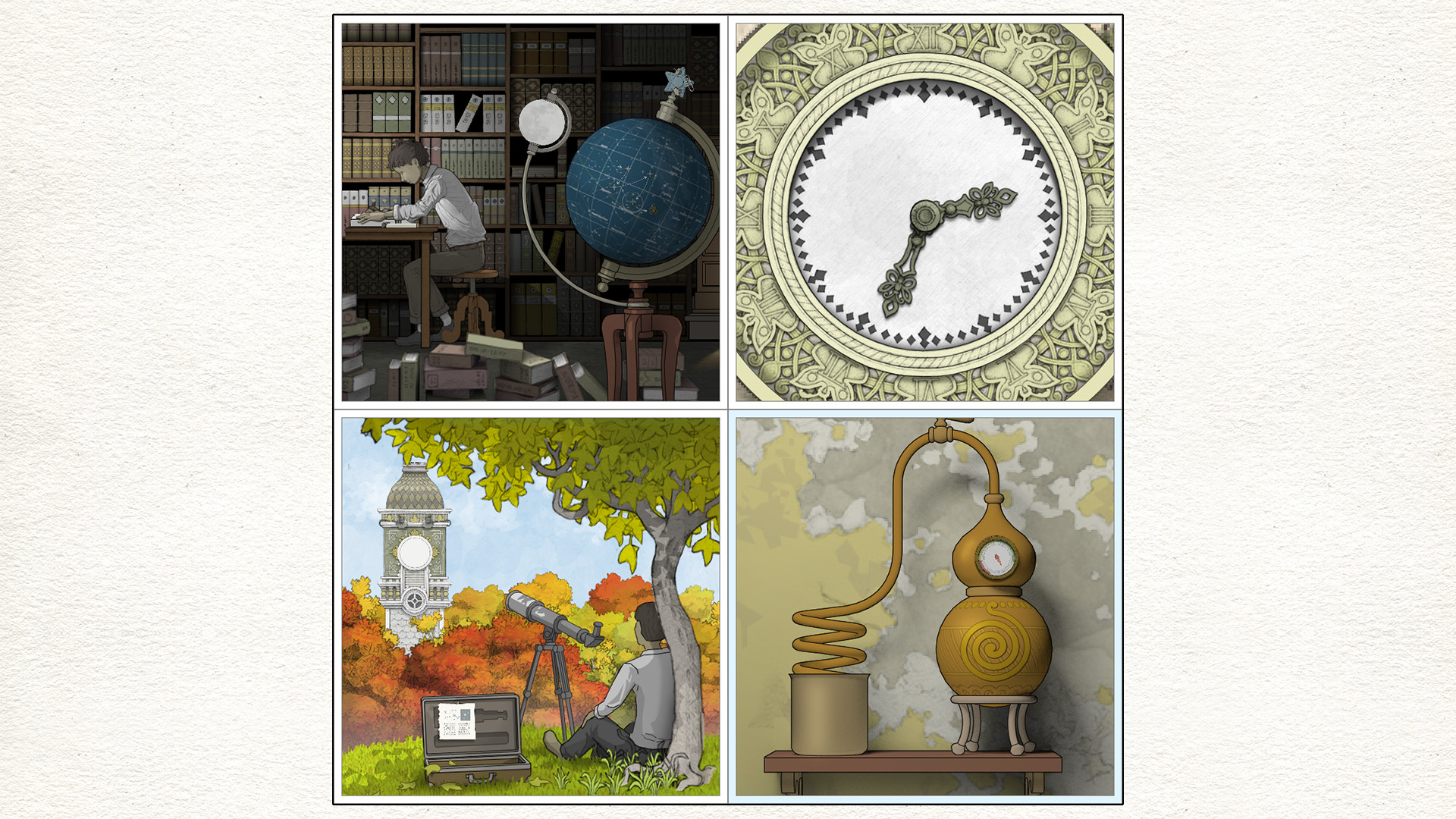
Separating panel components to create various different panels, each of which can be zoomed out or into of, creating new fantastical scenes and giving you more bits and pieces of the story and narrative to bite into is pretty interesting. I was quite a bit fan of it, personally, and I really enjoyed my short but poignant playtime thoroughly.
Something I would critique, though, is that the final stretch of the game, while it manages to tie the story together really well, feels less magical.
The game is only roughly two hours long but eventually, you learn all the tricks and all the ways that the game wants you to think, so just like with many other puzzle games, you kind of know the solution already, how to get there, and what to look out for, removing some of the naivety and magic that you experience at the start of it.
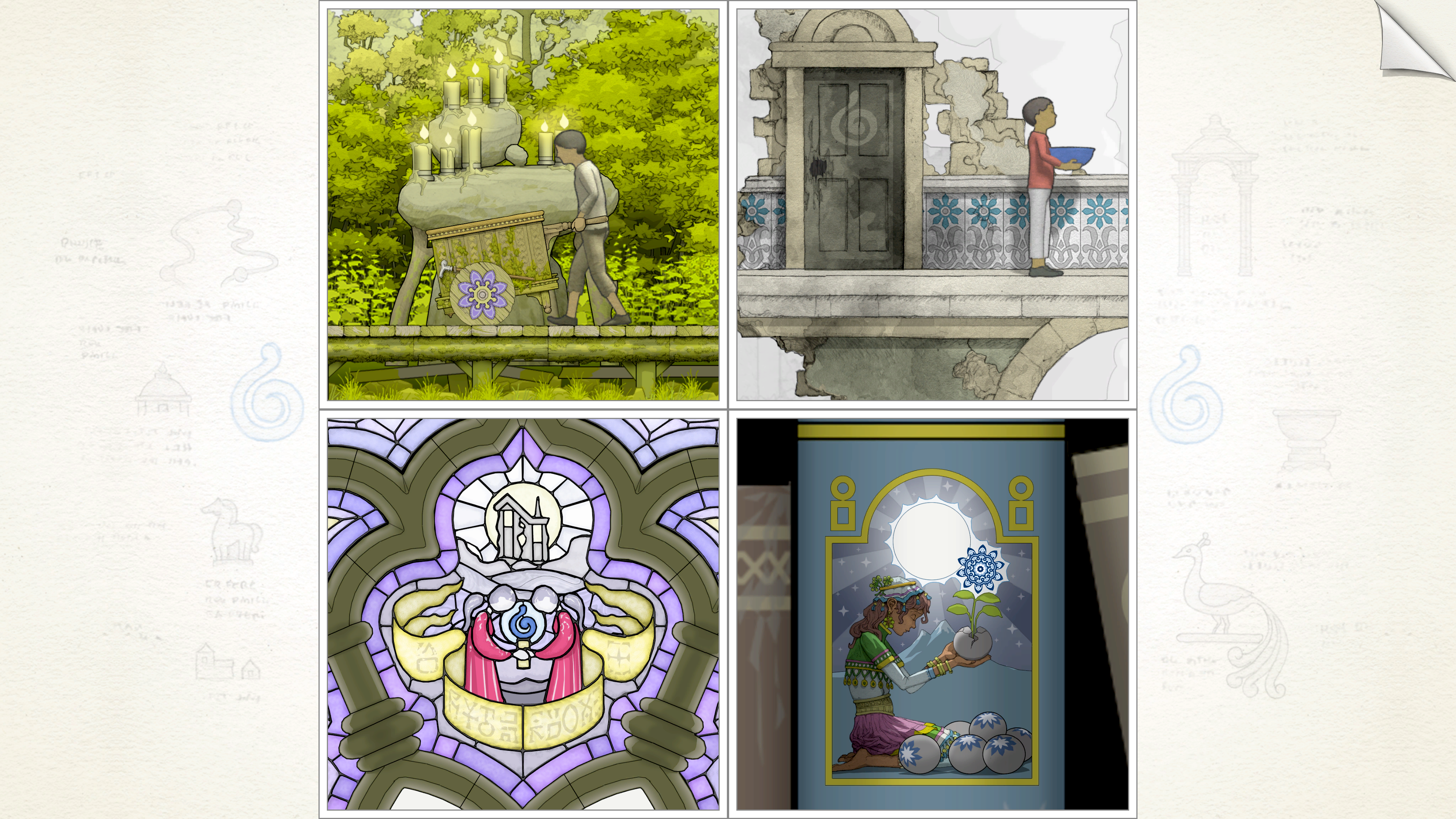
In a way, it’s fitting for my interpretation of the vague and obscure story, though, and the payoffs are still very satisfying.
That “ahhhh!” moment you’ve got when you solve a puzzle and follow the boy through the panels is pretty interesting and the game never gets stale. It’s just that the magic gets lost near the end but by that point, you’ll most likely be done with the game anyway, so it works in a way.
I wish I could have held onto that bit of wonder for just a tad longer but perhaps it’s the same as with my childhood adventures and eventually nostalgia is all that remains.
All in all, Gorogoa made me feel things. How dare it?!
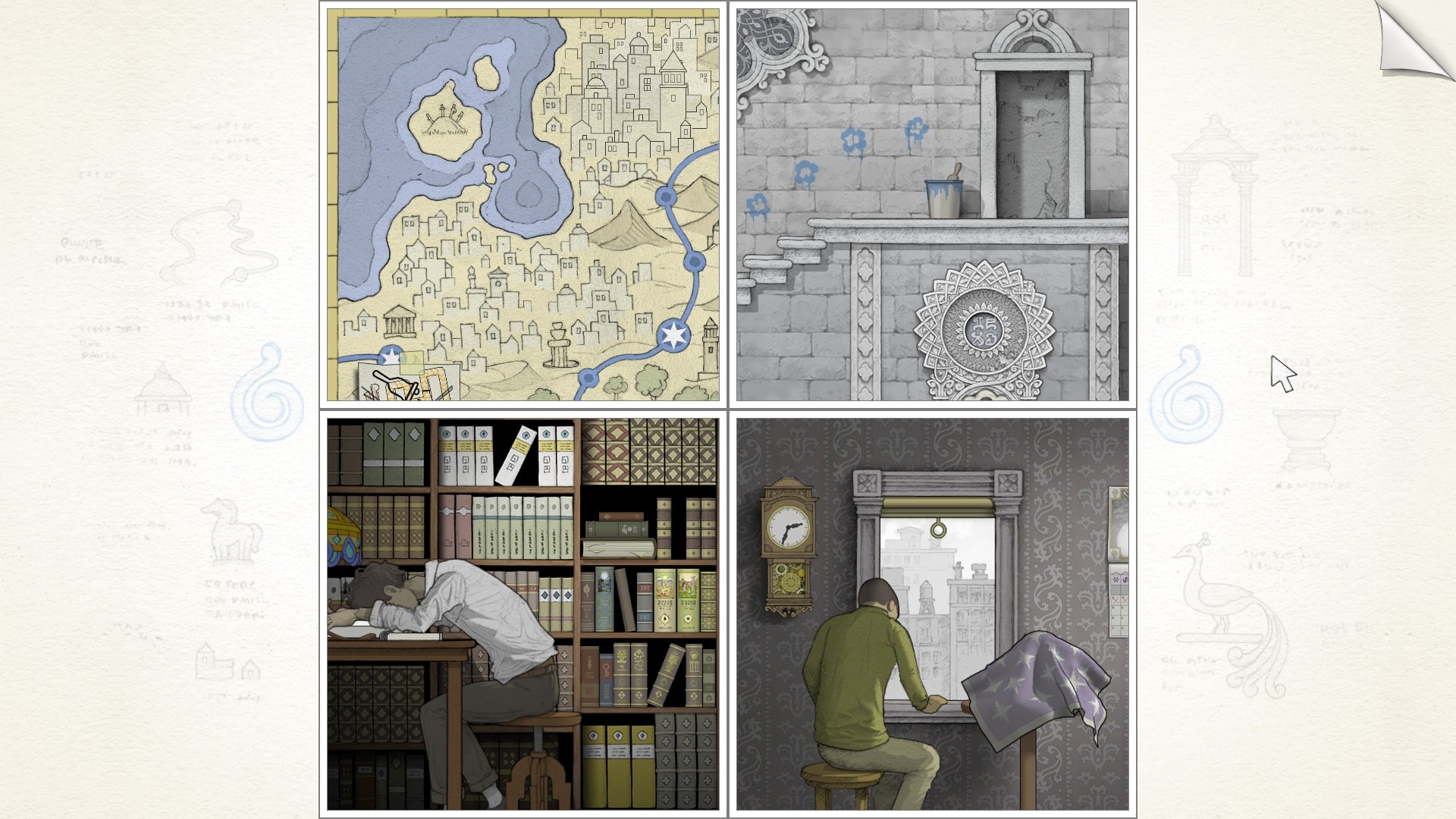
Jokes aside, Gorogoa is a beautiful and truly magical journey that doesn’t overstay its welcome and manages to create many different facets to the very same puzzle mechanics quite easily.
The short run-time lends itself quite nicely if you want to complete the game in one sitting or with but a few breaks in between. In an age where you barely have enough time for any of the longer games in your backlog, a small bite-sized indie gem like this one is just the thing after a long, tedious, and draining day.
I highly recommend checking Gorogoa out if you haven’t yet!
This post was originally written by Dan Dicere from Indiecator.
If you see this article anywhere other than Indiecator.org then this article has been scraped. Please let me know about this via E-Mail.
 Indiecator