
Transparency: One of the developers of Celestial Decks is a member of my Twitch community and first introduced me to the game through that connection. Since then, I've spent a considerable amount of time playing it because I genuinely enjoy it. I also previously hosted a single sponsored stream featuring the game. However, this review was not commissioned, paid for, requested, or reviewed by the developers. They had no editorial input on this article, and all opinions expressed here are entirely my own. I'm writing about Celestial Decks simply because I have spent a great amount of time in the game and think it's worth talking about.
As someone who’s played a lot of different online CCGs, ranging from MTG: Arena and Yu-Gi-Oh to Hearthstone and Legends of Runeterra, I get that itch sometimes, looking for new games to play with cool mechanics and interesting deckbuilding opportunities. Legends of Runeterra in particular was the game that really took hold of me. Its restrictions on deckbuilding created some incredibly interesting strategic decisions, elevating it beyond just another card game set in a world I loved. Sadly, PvP updates are non-existent, and the game’s development seems to have completely shifted towards its PvE mode.
Look, there are a lot of deckbuilding games and collectable card games out there, but I just couldn’t quite find something that scratches the same itch, and the ones that looked promising are sadly made by people who can’t be bothered to hire artists for their art, instead banking on AI-generated images that just look uncanny and mediocre…
Thankfully, that changed when I learned of Celestial Decks, a CCG set in the afterlife that’s become something of an obsession for me lately.
Developer: Celestial TCG Inc.
Genre: Indie, CCG
Release Date: Available in Beta, Full Release on December 1st, 2026
Reviewed on: PC (Browser)
Coming to: Web, Steam, Mobile (planned)

Celestial Decks is a CCG that takes a lot of inspiration from both Gwent and Legends of Runeterra, as well as other genre greats. Every turn, you and your opponent add cards to the story to amass worth. Whoever has more worth than the opponent scores a point, winning once you reach five points. So far, so simple. Your deck consists of 15 cards with no limitations as to what or how many colours you can combine or how many copies of a card you can run, giving you a lot of opportunities to experiment with interesting archetypes or possibly even add different game plans, but typically hyper-specialised decks or scaling decks tend to do well.
That is not to say that off-meta decks aren’t viable. There are some control/disrupt decks that are very silly to play with, decks that add cards to your opponent’s hand, preventing them from drawing more cards as a result, and even the odd meme deck that I like to build involving fish that scale up in value as you draw and play them. I like creating weird decks, even if my ELO suffers consequently in the leaderboards.
Since the cards you play aren’t revealed until the points get tallied, there is also a lot of mind-gaming you can do. Imagine you’ve had a poor draw and know that you’re not going to win this round either way. As such, you just set up for consequent turns but seeing this unknown card, your opponent plays their own cards to score more points, only to discover after the grand reveal that they fell right into your trap and used way more resources than necessary to win the round. This kind of psychological component is incredibly compelling in card games, in my opinion, and I find moments like these rather satisfying.

As for archetypes, the game features a total of 8 different colours that each focus on different mechanics, ranging from discard decks that gain value as you throw away cards to cards that allow you to attain bonus stats by “nourishing” subsequent cards or even cards that gain more value based on specific conditions, like the number of cards in your hand or in the story.
What I really like about Celestial Decks is also that it features a full PvE campaign where you get to experience the lives of different souls. Set in the afterlife, you’re a guide who helps departed souls come to terms with their regrets. In Journey mode, you start out with a few cards, and the game essentially explains different archetypes to you in a few puzzles with deck limitations. Once you complete these, those very same cards are added to your card pool to experiment with in other campaigns, meaning that if you ever get stuck in one puzzle match, you can instead focus on a different one to attain an upgrade to your card pool.
I particularly enjoy this mode because the storylines cover a vast range of themes, from individuality versus conformity to the struggles of youths trying to help their community to the spectres of trauma and the way they haunt one individual. Not all of these souls are equal, mind you. You can’t vibe with quite everyone, but the way in which Journey mode lets you explore different subjects in a meaningful and creative manner is quite compelling. On top of that, Journey mode also ties into the PvP side of things quite nicely as you’re awarded with a lot of free currency for completing stories, meaning that you’ll get to purchase new cards in the store regularly, allowing you to expand on your decks and build up more cool things.

The way in which you get to experience the strengths and weaknesses of certain archetypes is interesting, as it helps with theory-crafting and getting an idea of what decks are feasible, how the curve works, and more advanced mechanics that don’t get explicitly explained. I find it interesting, personally, and am a big fan of this approach. Celestial Decks doesn’t hold your hand necessarily, but the community has been very helpful in my experience, and the developers listen to a lot of the feedback, introducing balance patches and new content to unlock on the regular.

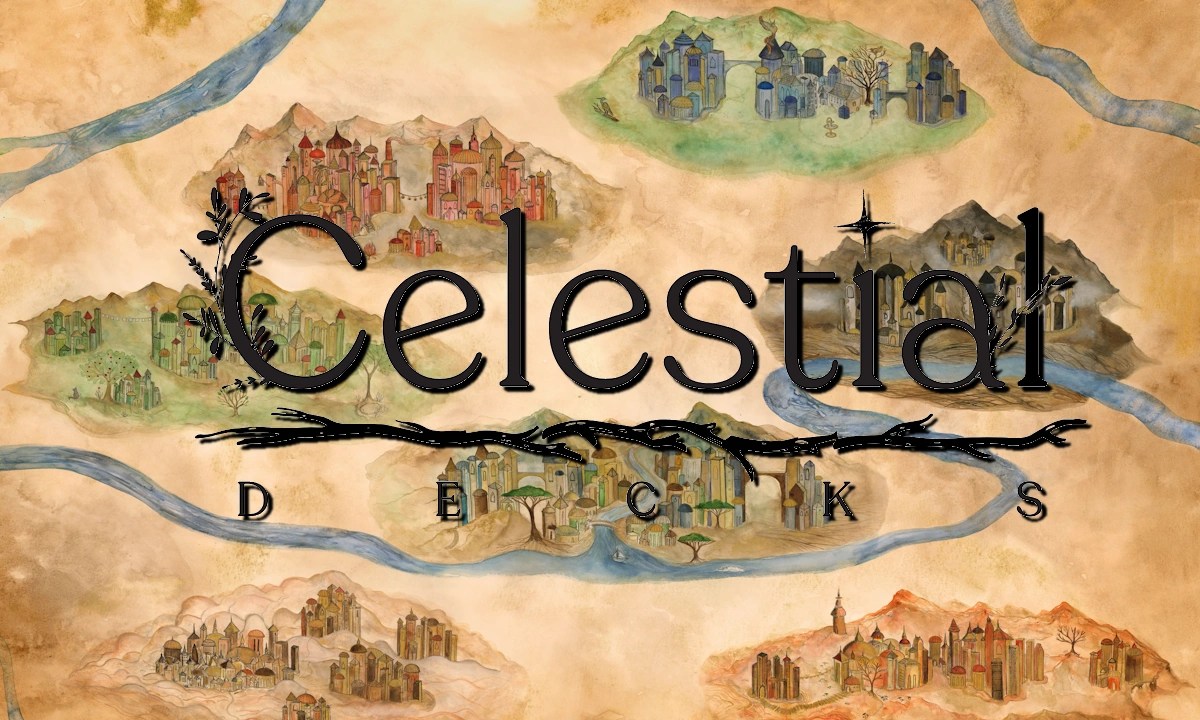
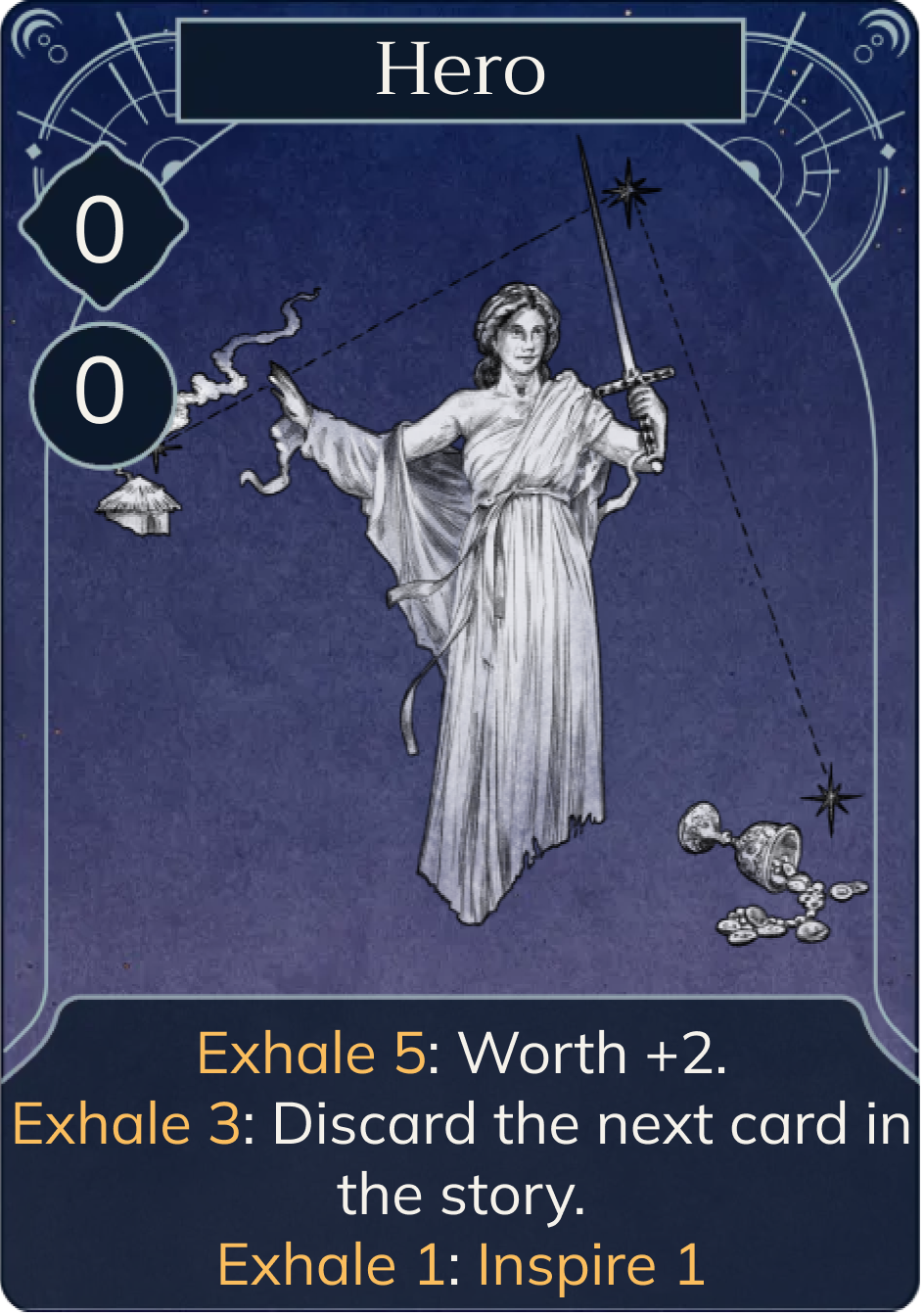
I think the biggest thing that Celestial Decks has going for it is the great and very distinct art. In an age where AI-generated artwork has been used over and over again in various CCGs, seeing human creativity and a distinct and almost impressionist visual identity is just lovely. That said, there’s currently no gallery where you can see all the art to watch all of it in higher res, sadly, and I’d love to see that added in a future update
That said, the game is far from perfect. I mean, it’s in beta. Metas do form from time to time, and the developers are working on balancing things and figuring out what approach to use for that. It’s not unusual for a beta to have rough edges, but it’s still worth mentioning. Some minor issues I have include the UI being a bit unintuitive at times, certain mechanics working differently than expected, and the occasional lack of visual clarity. Cards are drawn from the right and discarding a card means removing it from the left, which feels a little clunky, too.
While Celestial Decks is still in beta and has room to grow, it’s already become one of the most refreshing digital card games I’ve played in years. Its mix of hidden information, compact deckbuilding, meaningful PvE progression, and striking art direction gives it an identity of its own. If you’re looking for a fresh take on the genre, this one’s most definitely one to keep an eye out for, especially with its demo releasing on Steam later this year.
Verdict: Celestial Decks is a remarkably fresh take on the digital CCG genre that already offers deep deckbuilding, clever mind games, and a surprisingly thoughtful single-player campaign. It has its rough edges in various places, yes, but for a beta release, it is already rather impressive how much polish there is, and the game is one to keep an eye on for sure.
This post was originally published on Indiecator.
If you wanna get in touch with me, feel free to stop by for one of my Twitch streams. For business inquiries, please reach out via email.


Leave a Reply