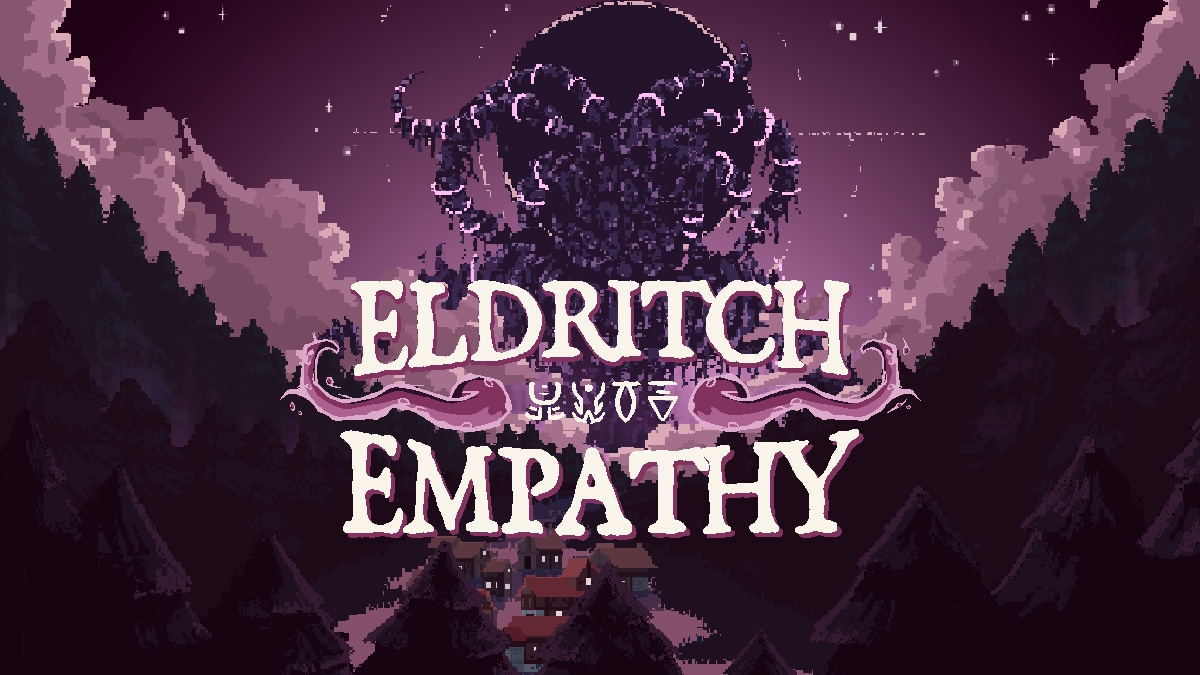
A couple of years ago, I had the chance to interview LUAL Games KIG’s Anna-Lena Pontet at Gamescom. The women-led two-person indie dev studio from Switzerland was working on their Lovecraftian narrative roguelike, Eldritch Empathy, with “combat” inspired by Papers, Please, and a story about understanding the unfathomable.
The demo I got to play at the time was incredibly fleshed out, featuring a fair few events, a lot of different gameplay elements, and some rather intriguing and very puzzly “fights”. In the vertical slice, I had to face off against eldritch monsters in the woods, figuring out how to not anger them too much or trying to understand what they’re doing/feeling. It’s a rather unique but interesting premise, especially with this huge focus on player agency and opportunities for a lot of different approaches!
Ironically, the recording got corrupted (it’s the eldritch influence, innit?), and I sadly couldn’t find a way to recover it… that is, until now, when I recovered a copy.
Hence, with the game’s release on the (hopefully not too distant) horizon and the recent news that LUAL Games KIG is partnering with Team17, what better time to publish the interview than now, right? Better late than never or something.
Editor’s Note: This interview was conducted at Gamescom several years ago. Some details about Eldritch Empathy may have changed since then. Furthermore, due to the fact that recording interviews at a busy convention hall has its challenges, part of the interview couldn’t be heard or transcribed. Whenever I had to cut out portions due to the audio issues, I’ve marked that with “[…]” in there. Parts added by me are marked with “[word]” in the text. The transcript has otherwise been kept verbatim, with only minor corrections to obvious transcription errors.
What is Eldritch Empathy about?
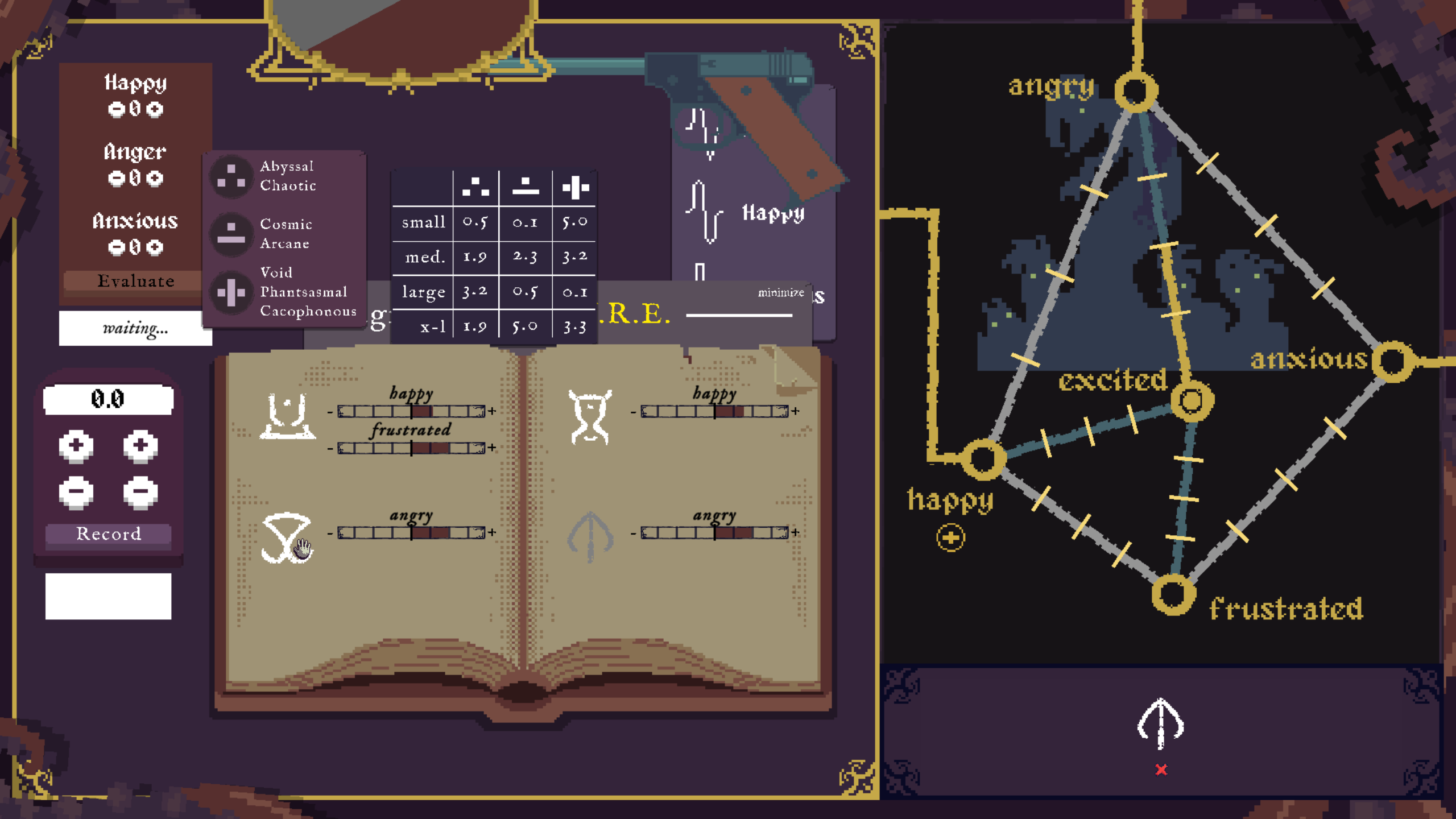
Eldritch Empathy is a Lovecraftian narrative roguelike with combat based on, well, Papers, Please, which means it’s not reflex-based and more puzzly. The story is about empathy versus violence, and how the way that you treat something you don’t understand — in this case, an eldritch monster — affects not only the thing itself but also you.
I guess the overarching goal, or metaprogression, is learning the language of the eldritch being and, in turn, teaching it how it’s supposed to act.
So the way you treat it also influences how the entities you encounter treat those around them?
Yeah, because the eldritch being is also a stranger to this world, right? […] For us it’s a neutral being. It’s not good or evil from the way we’re writing it, at least, and it’s going to look at your behaviour to figure out what the language of this planet is.
If you’re scared of this thing that you don’t know and react in a violent way, it’s gonna think that that’s the way it should behave on this world, whereas if you’re empathetic and kind, it’s gonna think “oh, that is the language of this world, so I’m also gonna behave like that”.
In the end, we want to really like leave it up to the player because we really care about high player agency and deep, meaningful narratives, so we want to leave it up to the player to decide what they want to do with this situation.
Oh, I love that idea! Where did you draw inspiration from for this game?
Apart from Papers, Please and I guess Undertale […], a big inspiration was definitely the movie and short story Arrival [sic] because our premise was like “language is power, language changes our perspective”. So, we thought “how can we make a game mechanic out of that?”
I really liked that movie! Especially from a linguistic perspective and how it tried to kinda show the pains of going through that sorta process, haha
Oh, well, it’s not a word-to-word translation kind of thing because that’d be a nightmare to port into other languages. It’s more of a “vibes”-based language, so every symbol has multiple emotions associated with it that then sort of make up what these symbols could mean.
Interesting! Are there “win” or “lose” conditions? Like, how does one end a run?
Well, the runs are essentially reaching the end of a randomly/procedurally generated node map with story nodes, resource nodes, and combat nodes.
You essentially reach the end of one map and then unlock the next one, but every story node is going to be progressive, kind of like in Hades. You essentially do the same thing over and over again, sure, but the story always progresses through that.
So, there’s metaprogression throughout the runs in the form of knowledge and story progress?
Yeah, the metaprogression is basically all about filling up your notebook with all the symbols, upgrading your tools and yourself, like you do in a roguelite, and then progressing the narrative itself.
What was the hardest part about making a game like this?
We definitely struggled with how the language should work.
In the beginning, we did have like a word-to-word kind of thing, but we stopped doing that because of the issue with translation, but also because language is so malleable. You can put things together in such different ways. Since it’s a game, however, you need to have, like, a right or a wrong answer mechanically. So, that’s where we struggled the most and where we had to iterate a lot to figure out how we can make it about language without it being too vague.
And you then landed on the current solution with the various symbols being about intentions and feelings rather than actual words?
Yes!
I find that really cool! What would you say was the most enjoyable part about making this game?
Everything! I’m the programmer in the team, but I love the art so much because I’m a huge pixel art fan. I’m so glad to have a business partner who does an amazing job at that. I just love looking at it, to be very honest.
But it was also really fun to program the systematic way the combat works and everything. It’s not done yet, obviously, but it’s great to see it come together.
So, like the cards moving and the feelings and all that?
Yeah, and like how every system interacts with other systems.
Is there a specific message that you want players to take away from this?
Because we really like making games, we really care about making titles where people walk away from it with a slight shift in perspective. We don’t like being preachy and being like, “you gotta treat others with kindness, blah, blah, blah” – It’s not an education game, after all; it’s still about entertainment.
But we like presenting things in a way where people maybe think about something a bit differently. More specifically, with Eldritch Empathy it might be “hey, my actions [towards] others are not isolated. They will affect everything else, too, and that affects me as well. Perhaps I should think a bit more about how I interact with my surroundings?”
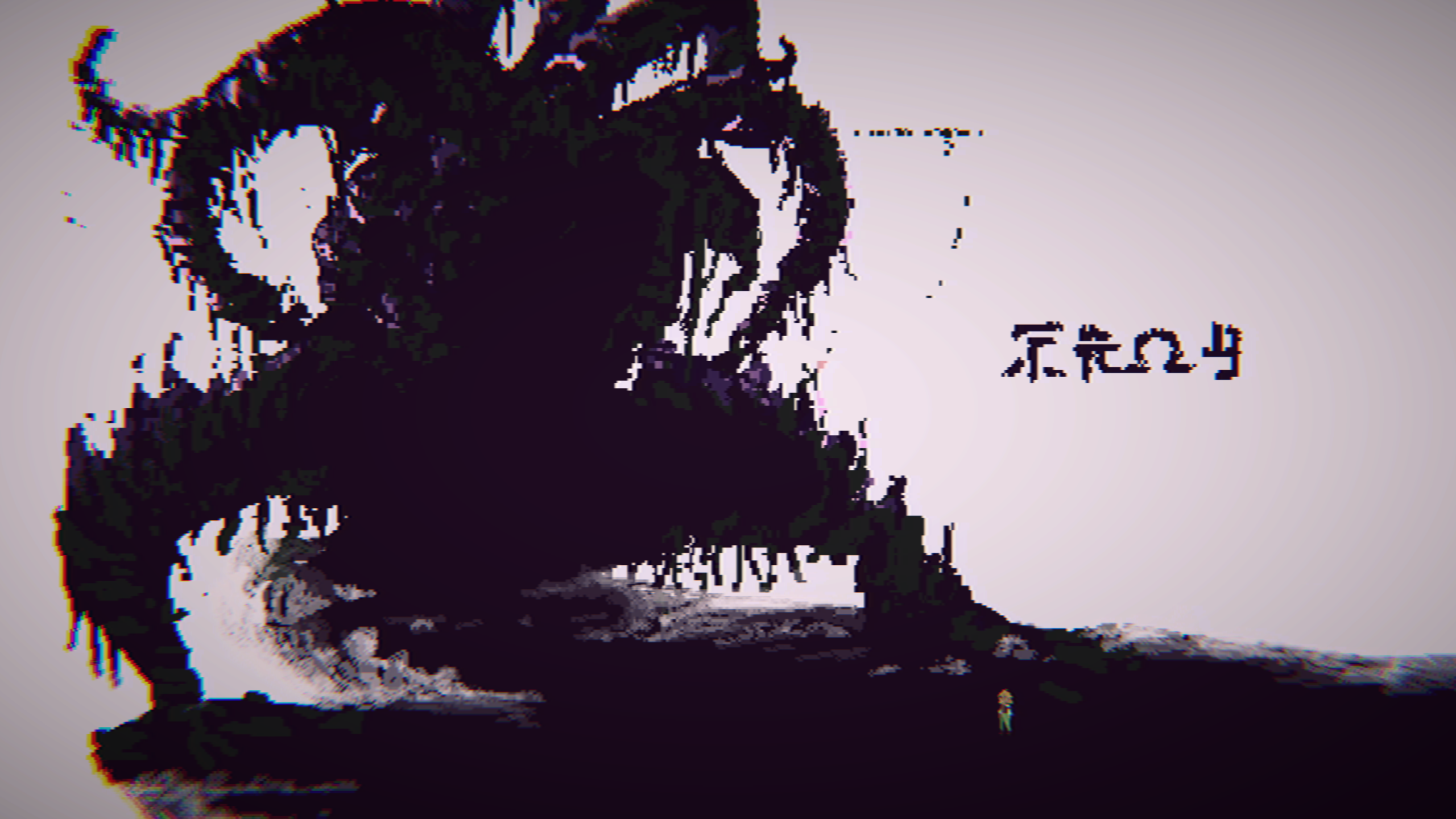
But also just because something is difficult to understand or different, that doesn’t mean that it’s inherently evil. I feel like a lot of Lovecraft-inspired horror goes into that fear of the unknown in a sense that it’s gonna drive you insane or that body-horror aspect, which is also fun and cool, you know, but we’re leaning more into the fear of the unknown and this situation where you actually try to engage with it. Perhaps it’s less scary then?
Do you also interact with other humans, or is it just the unfathomable?
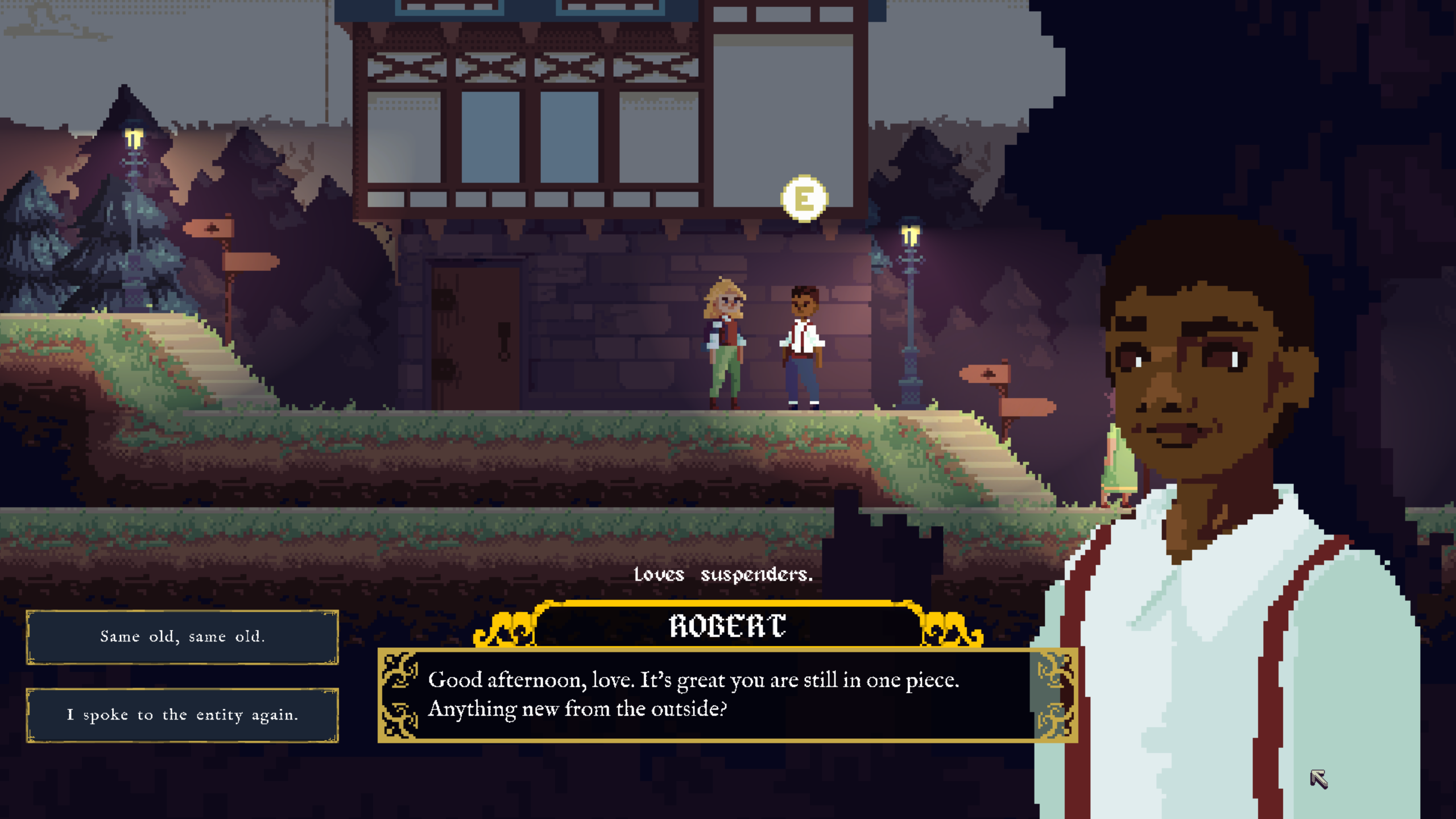
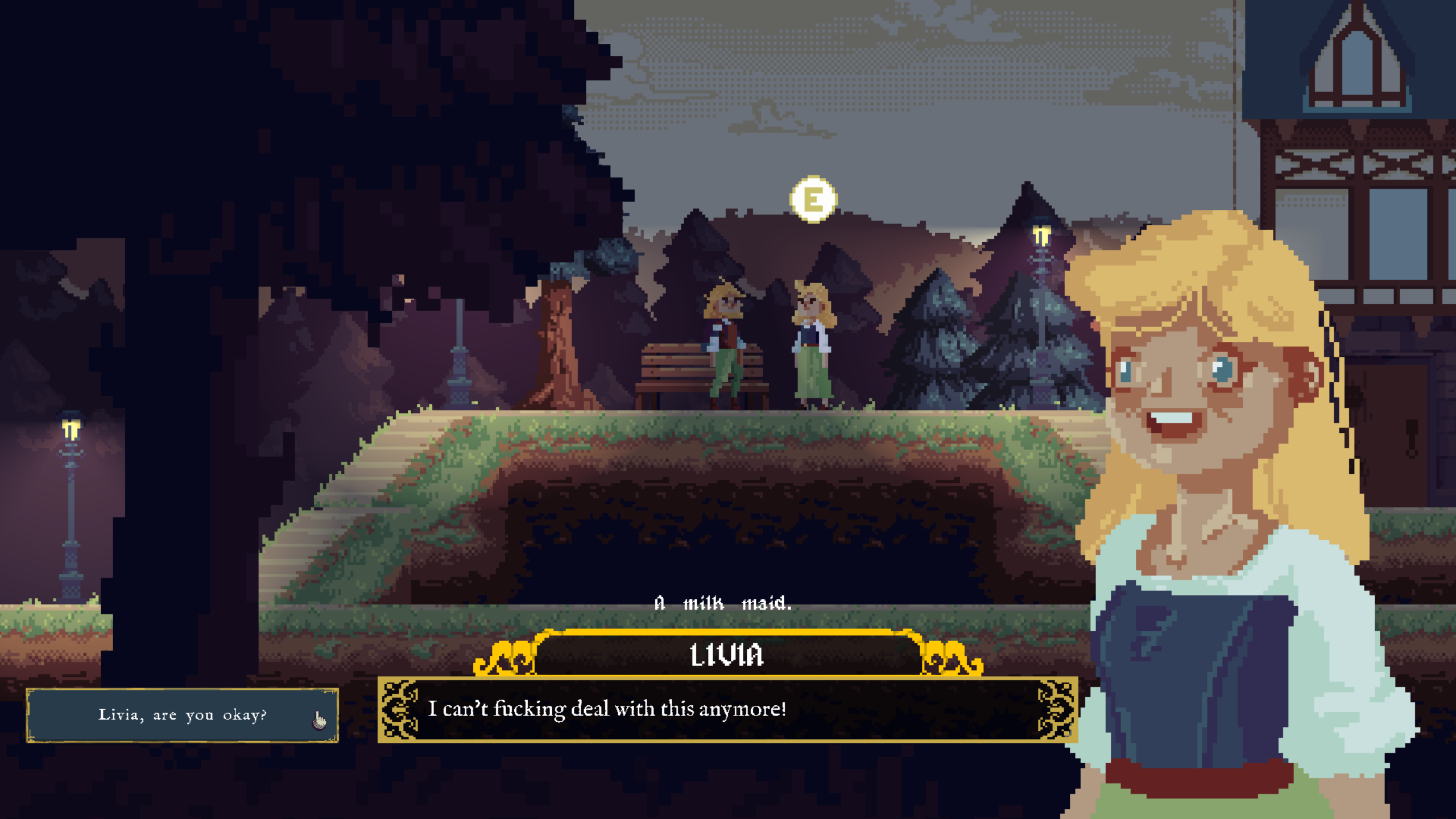
Oh, no, there is a hub area as well in the form of the village you grew up in, and there are a lot of people as well in there with some interesting relationship dynamics. No romance, though.
Everyone will have their own opinion, of course, and you can gain the trust of others. There might be a little mystery about maybe someone getting involved with bringing these eldritch creatures here. There are definitely a lot of things to discover as well, and as things progress, you’ll have to make some tougher choices that have an impact on a narrative level.
Do you have a release date in mind?
We don’t have anything announced just yet, but we’ll post some updates soon once we’re closer to finishing the game. In the meantime, you can wishlist the game; it helps a ton with the algorithm. You can also follow us on Twitter and keep your eyes open for updates!
Thanks a lot for your time!
Thank you.
As I mentioned already, this interview was done a couple of years ago, so a lot might have changed in the meantime, with more elements implemented into the game and a lot more to do. I’m a sucker for games with sanity mechanics and Lovecraftian inspirations, and I am really looking forward to checking out the full release!
Studying cosmic horrors, uncovering the mysteries of the corrupted woods, and influencing the world around you via empathy… or perhaps just mowing down the Eldritch entities with weaponry. It sounds like a great time overall, and I’m super excited to see the frequent updates on the Steam page.
It was such a great time chatting to Anna-Lena Pontet, and I’m really looking forward to what they’re working on. Go wishlist the game!
This post was originally published on Indiecator.
If you wanna get in touch with me, feel free to stop by for one of my Twitch streams. For business inquiries, please reach out via email.


Oh this looks really cool, I would love to check it out when it releases.
LikeLiked by 1 person